


Top 10 Decorative Ceiling Panel Designs for Luxury Interiors (2026 Guide)
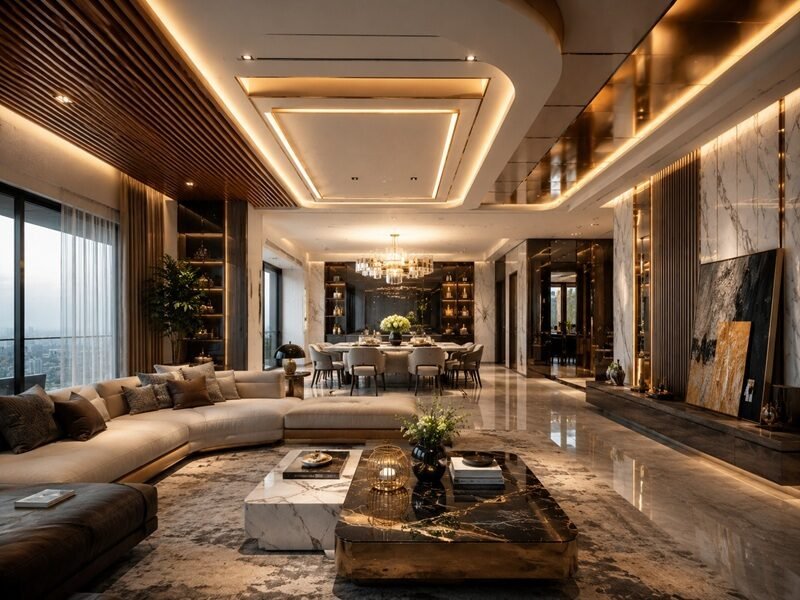
Introduction: The “Fifth Wall” Has Finally Arrived
For decades, interior design focused on four walls, the floor, and the furniture in between. The ceiling? It was just white paint and a light fixture. Not anymore.
In 2026, the ceiling has officially become the “fifth wall” — and the most talked-about design canvas in luxury interiors. From penthouse apartments in Dubai to heritage villas in South Mumbai, architects and interior designers are looking up, and making that view count.
The growing demand for decorative ceiling panel designs is no coincidence. Homeowners and developers are realizing that a beautifully designed ceiling adds something that no wall treatment or furniture can replicate — architectural depth, visual grandeur, and a sense of crafted completeness.
But decorative ceilings aren’t just about aesthetics. The right luxury ceiling panels also enhance:
- Acoustics — reducing echo and improving sound quality
- Lighting — integrating hidden LEDs, mood lighting, and smart systems
- Thermal comfort — certain panels offer insulation benefits
- Luxury ambiance — elevating even a modest room to hotel-grade finesse
- Property value — statement ceilings are increasingly a luxury real estate selling point
Whether you’re building a new villa, renovating a penthouse, designing a boutique hotel, or upgrading a premium office — this guide to the top 10 decorative ceiling panel designs gives you everything you need to make a high-impact decision.
Top 10 Decorative Ceiling Panel Designs for Luxury Interiors
1. Wood Slat Ceiling Panels — Warmth Meets Modern Sophistication
Overview: Wood slat ceiling panels deliver natural warmth in a deeply modern format. Evenly spaced wooden strips are suspended from a frame, creating a rhythmic, textured canopy overhead. The effect is simultaneously organic and architectural.
Materials Used: Teak, walnut, oak, bamboo composites, and engineered wood veneers. Acoustic backing in felt or mineral wool is commonly added.
Why It’s Trending: In 2026, the biophilic design movement continues to drive demand for natural materials in luxury spaces. Wood slat ceilings bridge the gap between raw nature and refined design beautifully.
Best Spaces: Living rooms, executive boardrooms, hotel lobbies, luxury retail spaces, and open-plan penthouses.
Lighting Compatibility: Excellent — LED strips or spotlights can be recessed between slats to create stunning shadow-play effects at night.
Acoustic Advantage: Very high. The perforated backing and slat spacing absorb sound effectively, reducing reverb in large rooms.
Styling Tip: Pair with concrete floors and linen sofas for a modern Japanese-Scandinavian luxury aesthetic. Avoid heavy baroque furniture — let the ceiling breathe.
Maintenance: Low-to-moderate. Wipe down with a dry microfiber cloth seasonally. Treat annually with wood-safe polish.
Luxury Appeal Level: ★★★★★
2. Coffered Ceiling Designs — Timeless Grandeur, Reinvented
Overview: Coffered ceilings — recessed panels set within a grid of beams — are one of architecture’s most enduring luxury statements. Originally found in Greek temples and Renaissance palaces, they’ve been reinterpreted for contemporary luxury with sharper geometries, lacquered finishes, and integrated lighting.
Materials Used: Gypsum plaster, MDF (medium-density fibreboard), pre-cast polyurethane, solid wood, and hand-painted lacquer finishes.
Why It’s Trending: Neo-classical meets contemporary design is a dominant theme in 2026 luxury interiors. Deep coffered ceilings with integrated lighting offer both architectural gravitas and practical illumination.
Best Spaces: Formal dining rooms, home libraries, master bedrooms, luxury hotel suites, and presidential offices.
Lighting Compatibility: Excellent. Each coffer can house a recessed downlight or a mini chandelier, creating a layered lighting grid.
Styling Tip: In modern interiors, keep coffers shallow (4–6 inches deep) and use a single accent colour or gold trim to keep the look current rather than dated.
Maintenance: Gypsum or polyurethane requires touch-up painting every 3–5 years. MDF variants need moisture protection in humid climates.
Luxury Appeal Level: ★★★★★
3. Backlit LED Ceiling Panels — Smart Ambiance, Modern Drama
Overview: Backlit LED ceiling panels are the hallmark of contemporary luxury. Diffused light emanates from behind frosted acrylic, glass, or stretched fabric, creating a ceiling that glows as a unified luminous surface — like daylight captured indoors.
Materials Used: Frosted acrylic panels, tempered glass, LED-compatible stretched fabric membranes, and aluminium framing systems.
Why It’s Trending: Smart home integration, energy efficiency, and the demand for theatrical lighting moments have made backlit LED panels a staple of high-end residential and hospitality design in 2026.
Best Spaces: Master bathrooms, home cinemas, corporate boardrooms, luxury hotel lobbies, spa interiors, and walk-in wardrobe rooms.
Lighting Compatibility: This is the lighting. Many systems now integrate RGBW LEDs with smart home platforms like Crestron, Control4, or KNX for mood programming.
Acoustic Advantage: Limited by default, but acoustic fabric versions offer moderate sound absorption.
Styling Tip: Use warm white (2700K–3000K) for residential spaces and cool white (4000K) for commercial. Avoid visible pixel patterns — choose high-density LED strips and proper diffusion layers.
Maintenance: Very low. LEDs last 50,000+ hours. Panel cleaning requires only light dusting.
Luxury Appeal Level: ★★★★★
4. 3D Geometric Ceiling Panels — Bold Statements, Fearless Design
Overview: Three-dimensional geometric ceiling panels push interior design into sculptural territory. Pyramids, hexagons, wave patterns, and lattice forms are machined or cast into panels that turn the ceiling into a work of architectural art.
Materials Used: CNC-routed MDF, cast gypsum, thermoformed PVC, fibreglass composites, and laser-cut metal screens.
Why It’s Trending: As luxury interiors move away from plain false ceilings, 3D panels bring visual energy to commercial and residential spaces that demand a distinctive identity — particularly for branded hospitality and high-end retail.
Best Spaces: Luxury lounge bars, hotel lobbies, premium restaurants, nightclubs, corporate receptions, and feature rooms within luxury residences.
Lighting Compatibility: Outstanding. The relief geometry creates incredible shadow play with directional lighting. Concealed LED washes behind 3D panels create depth that appears to shift with changing light angles.
Styling Tip: Choose one dominant geometric theme per space. Mixing multiple 3D patterns overhead creates visual chaos. In luxury interiors, restraint is always more powerful.
Maintenance: Moderate. Dust accumulates in recesses — use compressed air or a soft brush every 1–2 months.
Luxury Appeal Level: ★★★★☆
5. Metallic Ceiling Panels — Ultra-Modern, Unapologetically Luxurious
Overview: Gold, bronze, brushed aluminium, blackened steel — metallic ceiling panels bring a level of material opulence that few other finishes can match. Whether mirror-polished or satin-brushed, they command attention the moment you enter a room.
Materials Used: Anodised aluminium, powder-coated steel, brass-clad panels, copper-finished tiles, and mirror-polished stainless steel.
Why It’s Trending: In 2026, the maximalist luxury revival has made metallic finishes hugely popular in premium hospitality and luxury residential design. Brushed gold and blackened metal, in particular, have replaced chrome as the refined metal of choice.
Best Spaces: Luxury hotel bars, powder rooms, statement dining rooms, art galleries, private clubs, and jewellery showrooms.
Lighting Compatibility: Very high. Metallic surfaces reflect and amplify light, making the room feel larger and more dramatic. Warm lighting (amber LEDs) on gold panels is a particularly stunning combination.
Styling Tip: Balance metallic ceilings with matte surfaces below — dark walls or soft furnishings prevent the space from feeling overwhelming.
Maintenance: Low. Occasional wiping with a damp microfibre cloth. Avoid abrasive cleaners on polished finishes.
Luxury Appeal Level: ★★★★★
6. Marble-Inspired Ceiling Panels — Stone-Cold Luxury
Overview: Marble on the floor is expected. Marble on the ceiling is extraordinary. Modern marble-effect panels use high-resolution printing and resin coatings to replicate the veining and depth of Calacatta, Statuario, or Nero Marquina — without the structural limitations of real stone overhead.
Materials Used: High-pressure laminate (HPL), digitally printed ceramic composites, resin-coated fibre cement panels, and genuine thin-cut marble veneer sheets.
Why It’s Trending: Luxury hotels and penthouse developers increasingly use material continuity — carrying marble from floors to walls to ceilings — to create fully immersive stone environments. The look is aspirational and deeply luxurious.
Best Spaces: Hotel lobbies, luxury bathroom en-suites, penthouse reception rooms, premium spa reception areas, and high-end elevator interiors.
Lighting Compatibility: Good. Warm downlighting enhances marble’s veining patterns. Backlit applications are possible with translucent marble veneer sheets.
Styling Tip: Keep the rest of the room’s palette restrained. Let the marble ceiling be the hero. Pair with brushed brass fixtures and warm-toned upholstery for a fully cohesive luxury look.
Maintenance: Marble-effect panels are easier to maintain than real stone — wipe with a damp cloth. Genuine marble veneer sheets need sealing annually.
Luxury Appeal Level: ★★★★★
7. Acoustic Fabric Ceiling Panels — Comfort Designed for Sound
Overview: Acoustic fabric ceiling panels solve one of luxury living’s most persistent problems: echo. Stretched over acoustic foam or mineral wool frames, they create a soft, textured ceiling surface that is as sonically functional as it is visually refined. Premium versions are fully bespoke — custom colours, printed patterns, even artwork.
Materials Used: Micro-perforated fabric, stretched polyester acoustic fabric, felt composites, Kvadrat and Camira-grade textile panels, and acoustic foam infills.
Why It’s Trending: As open-plan luxury living spaces grow larger, acoustic comfort becomes a premium feature rather than an afterthought. In 2026, leading architects specify acoustic panels not just for media rooms — but for kitchens, dining areas, and master bedrooms too.
Best Spaces: Home cinemas, recording studios, premium offices, luxury restaurants, boutique hotels, and open-plan living-dining areas.
Lighting Compatibility: Moderate. Acoustic panels can be back-lit if framed correctly. Perimeter LED coves work well around acoustic ceiling sections.
Acoustic Performance: Outstanding — NRC (Noise Reduction Coefficient) values of 0.70–0.95 are achievable with premium acoustic ceiling systems.
Styling Tip: Choose fabric in a tone slightly lighter than your walls for a cocooning, immersive effect. Deep charcoal or warm flax tones work particularly well in media spaces.
Maintenance: Low — vacuum gently with an upholstery attachment seasonally. Some panels are removable for dry cleaning.
Luxury Appeal Level: ★★★★☆
8. Curved and Wave Ceiling Designs — Where Architecture Becomes Sculpture
Overview: Straight lines and right angles are the grammar of conventional architecture. Curved and wave ceiling designs break those rules entirely — creating flowing, organic forms overhead that give rooms a sense of fluid dynamism and spatial drama.
Materials Used: Flexible gypsum board, bent aluminium extrusions, curved timber strips, GRP (glass-reinforced plastic), and CNC-formed acrylic.
Why It’s Trending: Parametric and organic architecture has entered mainstream luxury residential design in 2026. Custom curved ceilings are now a signature feature in award-winning villas, yacht interiors, and avant-garde hospitality projects.
Best Spaces: Luxury penthouse lounges, boutique hotel receptions, spa relaxation rooms, contemporary art galleries, and feature dining areas.
Lighting Compatibility: Exceptional. LED tape lighting running within wave forms creates a luminous, ever-shifting ceiling landscape that changes character entirely from day to night.
Styling Tip: Curved ceilings work best in rooms with high ceilings (10 feet or more). Pair with bespoke curved furniture to echo the overhead form — this creates an architecturally cohesive luxury environment.
Maintenance: Higher than flat ceilings. Cleaning and touch-up painting of curved surfaces requires more care and skilled contractors.
Luxury Appeal Level: ★★★★★
9. Minimalist Floating Ceiling Panels — Clean Luxury, Invisible Detail
Overview: Floating ceiling panels are suspended planes of material — gypsum, stone composite, or lacquered MDF — that appear to hover above the main ceiling plane, with thin gaps that conceal lighting, ventilation, and structural elements. The effect is architecturally clean and deeply sophisticated.
Materials Used: Large-format gypsum board, micro-concrete panels, stone veneer composites, back-painted glass, and lacquered MDF.
Why It’s Trending: In 2026, luxury minimalism remains the dominant aesthetic across premium residential and corporate design. Floating ceiling planes allow perfect integration of smart lighting and HVAC systems without visual clutter.
Best Spaces: Luxury show flats, corporate executive suites, master bedroom suites, minimalist villa living areas, and luxury retail concept stores.
Lighting Compatibility: Exceptional. The floating gap is the ideal channel for concealed LED cove lighting — casting a warm halo around the suspended panel and making the ceiling appear to levitate.
Styling Tip: The floating panel should be proportionally smaller than the ceiling it occupies (roughly 60–70% of the total ceiling area). This preserves the floating effect and prevents the room from feeling boxed in.
Maintenance: Very low. Sealed and painted surfaces wipe clean easily.
Luxury Appeal Level: ★★★★★
10. Custom Artistic Ceiling Panels — Bespoke Luxury, One of One
Overview: At the pinnacle of ceiling design sits the fully custom artistic ceiling panel — a bespoke commission that treats the overhead surface as a gallery wall. From hand-painted murals on gypsum to CNC-carved relief patterns, laser-etched metal canopies to artist collaborations, these ceilings are unique in the truest sense.
Materials Used: Anything and everything — painted canvas, gold-leaf gypsum, carved stone, hand-blown glass, woven metal mesh, digital ceramic tiles, or lacquered shell inlay.
Why It’s Trending: Ultra-high-net-worth clients increasingly want homes with museum-calibre design moments. The ceiling — so long ignored — has become the ultimate canvas for bespoke luxury expression.
Best Spaces: Private luxury residences, signature hotel suites, private members’ clubs, luxury restaurant centrepieces, and VIP corporate boardrooms.
Lighting Compatibility: Fully customisable — integrated lighting is designed as part of the bespoke commission, not added afterward.
Acoustic Performance: Variable, depending on materials chosen. Can be specified to include acoustic performance as part of the design brief.
Styling Tip: Commission this type of ceiling only when the rest of the room’s design is resolved and restrained. The artistic ceiling should be the single, undisputed focal point — not competing with statement furniture or feature walls.
Maintenance: Specialist dependent. Commission care guidelines from the designer or fabricator. Annual inspection recommended.
Luxury Appeal Level: ★★★★★ (Off the charts for bespoke commissions)
Comparison Table: Top 10 Luxury Ceiling Panel Designs at a Glance
| # | Style Type | Luxury Level | Maintenance | Best Use Case | Cost Range (INR/sq ft) | Lighting Compatibility | Acoustic Performance |
|---|---|---|---|---|---|---|---|
| 1 | Wood Slat Panels | ★★★★★ | Low–Moderate | Living Rooms, Offices | ₹800–₹2,500 | Excellent | High |
| 2 | Coffered Ceilings | ★★★★★ | Low | Villas, Dining Rooms | ₹1,200–₹4,000 | Excellent | Moderate |
| 3 | Backlit LED Panels | ★★★★★ | Very Low | Hotels, Bathrooms, Cinemas | ₹1,500–₹5,000 | Built-In | Low–Moderate |
| 4 | 3D Geometric Panels | ★★★★☆ | Moderate | Lounges, Commercial | ₹900–₹3,500 | Outstanding | Moderate |
| 5 | Metallic Panels | ★★★★★ | Low | Bars, Dining, Showrooms | ₹1,000–₹4,500 | Very High | Low |
| 6 | Marble-Inspired Panels | ★★★★★ | Low | Hotels, Penthouses, Spas | ₹1,200–₹6,000 | Good | Low |
| 7 | Acoustic Fabric Panels | ★★★★☆ | Low | Cinemas, Offices, Restaurants | ₹700–₹2,800 | Moderate | Outstanding |
| 8 | Curved & Wave Ceilings | ★★★★★ | High | Villas, Hotels, Galleries | ₹2,000–₹8,000+ | Exceptional | Moderate |
| 9 | Floating Minimalist Panels | ★★★★★ | Very Low | Residences, Retail, Offices | ₹1,000–₹3,500 | Exceptional | Low |
| 10 | Custom Artistic Panels | ★★★★★ | Specialist | Residences, Private Clubs | ₹5,000–₹25,000+ | Fully Custom | Variable |
Luxury Ceiling Design Trends for Modern Homes in 2026
The way luxury homeowners think about their ceilings has fundamentally changed. Here’s how different space types are leading the evolution:
Villas and Independent Homes: Double-height ceilings with custom coffered or curved designs are emerging as signature architectural features. Wood slat and backlit LED combinations are particularly popular in open-plan living and dining areas.
Penthouses and Luxury Apartments: Minimalist floating panels with concealed LED coves dominate. The goal is clean visual luxury — nothing superfluous, everything intentional. Acoustic panels are increasingly being specified for penthouse bedrooms to combat urban noise.
Luxury Apartments in Mid-Range Projects: 3D geometric and metallic panels are being used to create premium-feeling spaces at lower ceiling heights (9–10 feet). Smart LED integration is now a standard specification in developments targeting the premium segment.
Home Theatres: Acoustic fabric ceilings remain unmatched for dedicated cinema rooms. Paired with floating panels and indirect LED coves, home theatre ceilings create the perfect immersive environment.
Open-Concept Living Spaces: Wood slat ceilings running continuously across living, dining, and kitchen zones tie together large spaces with a warm, unified overhead plane.
Decorative Ceiling Panels for Commercial Luxury Spaces
Luxury commercial interiors demand ceiling designs that work harder — managing acoustics, reinforcing brand identity, and creating memorable sensory experiences.
Hotels: Statement ceilings in lobbies, bars, and signature restaurants are increasingly brand-defining design elements. Curved ceilings, custom artistic panels, and large-format backlit installations create the “arrival moment” that luxury travellers remember.
Premium Offices: Floating minimalist panels with integrated smart lighting, concealed HVAC, and acoustic elements represent best-in-class commercial ceiling design. Biophilic wood slat ceilings are transforming executive suites.
Luxury Retail Showrooms: 3D geometric and metallic ceiling panels set the tone for premium brand environments. The ceiling design signals quality before the customer has touched a single product.
Fine Dining Restaurants: Acoustic fabric panels have become a genuine selling point as diners increasingly value the ability to hold a conversation without shouting. Warm backlit panels above intimate dining areas create instant ambiance.
Luxury Salons and Spas: Curved, wave-form ceilings combined with acoustic fabric and indirect warm lighting create the healing, immersive environment that premium wellness clients expect.
Best Materials for Luxury Ceiling Panels
Choosing the right material is the foundation of any successful luxury ceiling project. Here’s a practical guide:
Gypsum Plaster: The workhorse of luxury ceiling design. Excellent for coffered, curved, and custom sculpted forms. Smooth finish, easily painted, fire-resistant. Moderate cost. Limited moisture resistance without treatment.
Solid and Engineered Wood: Brings unmatched warmth and authenticity to a space. Best for slat and panel applications. Higher cost. Requires climate-managed environments and regular treatment.
Metal (Aluminium, Steel, Brass): Offers durability, precision, and a range of premium finishes. Excellent for high-traffic commercial spaces. Long lifespan, recyclable. Higher upfront cost.
PVC and Thermoformed Polymers: Cost-effective entry point for decorative ceiling applications. Lightweight, moisture-resistant. Less prestigious in feel — best used in back-of-house or utilitarian luxury spaces.
Acoustic Felt and Fabric: Combines aesthetic softness with functional sound management. Increasing sustainability credentials (many made from recycled polyester). Excellent for open-plan and commercial spaces.
Marble Finish Panels (HPL/Resin): The practical alternative to real stone overhead. Lightweight, durable, and visually indistinguishable from genuine marble at ceiling height. Highly recommended for hospitality applications.
Fibre Cement: Durable, fire-resistant, and suitable for exterior-influenced luxury spaces. Growing in popularity for industrial-luxe aesthetics. Takes paint, cladding, and surface treatments well.
Ceiling Lighting and Smart Integration: The Luxury Ceiling in the Connected Home
The most sophisticated luxury ceiling panels in 2026 are not just design elements — they are intelligent systems.
Hidden LED Cove Lighting is the most universally used technique — LED strips concealed within floating panels, coffer edges, or slat gaps create indirect light that is soft, directional, and completely free of glare.
RGBW Smart Lighting Systems integrated behind backlit panels allow homeowners to programme ceiling colour temperatures and moods throughout the day — warmer, amber tones in the evening, cool daylight in the morning.
Integrated Speakers concealed within acoustic panel systems allow premium audio to emerge from the ceiling with no visible hardware — a feature increasingly specified in luxury home entertainment and hospitality spaces.
Smart Home Compatibility — platforms such as Crestron, Lutron Caseta, KNX, and Apple HomeKit now integrate directly with premium ceiling lighting systems, allowing scene-setting and voice or app control.
Motorised Panels — an emerging category in ultra-luxury residential design, where ceiling panels can retract, pivot, or shift position at the touch of a button, revealing skylights, art niches, or lighting features beneath.
Expert Interior Design Tips for Luxury Ceiling Panels
Great ceiling design begins well before the first panel is installed. Here’s what leading designers recommend:
Match ceiling design to room height. For ceilings under 9 feet, use flat or slightly recessed panels to avoid visual compression. Coffered and curved designs need at least 10–12 feet to breathe properly.
Start with lighting, then design around it. The most common mistake is choosing a panel design and then trying to fit lighting in afterward. Plan lighting zones first, then choose ceiling treatments that enhance those zones.
Balance textures, don’t compete. If your ceiling is rich in texture (wood slats, 3D panels), keep walls and floors quieter. If your walls carry a design statement, a clean floating panel or subtle coffer keeps the ceiling from crowding the room.
Avoid overcrowding. Luxury is defined by what you leave out as much as what you include. A single well-executed ceiling design — one type, one material, beautifully detailed — will always outperform a ceiling with four competing ideas.
Mix materials elegantly. Wood and metal, marble and light, fabric and geometry — paired correctly, contrasting materials create premium visual depth. The key is maintaining a consistent colour palette across all ceiling elements.
Commission mockups for bespoke projects. For custom artistic or curved ceiling commissions, always request a physical mockup or detailed 3D render before fabrication. The ceiling is the hardest element in a room to modify after installation.
Conclusion: The Luxury Ceiling Has Found Its Moment
There was a time when the ceiling was the last thing anyone thought about in interior design. That time is firmly behind us.
In 2026, the world’s most considered luxury interiors share a common trait — they look up. Decorative ceiling panels are no longer a finishing touch. They are a primary design decision — one that shapes the acoustic character, lighting quality, material language, and emotional atmosphere of every space they inhabit.
From the organic warmth of wood slat panels to the dramatic geometry of 3D forms, from the quiet intelligence of acoustic fabric to the bespoke brilliance of custom artistic commissions — today’s luxury ceiling panel designs offer an unprecedented range of creative and functional possibilities.
The trajectory is clear. The luxury ceiling of tomorrow will be smarter, more sustainable, more acoustically refined, and more artistically ambitious than anything that came before. Designers and homeowners who invest in ceiling design today are not simply finishing a room — they are defining it.
Frequently Asked Questions (FAQs)
Q1. What are the best decorative ceiling panel designs for luxury homes?
The best designs for luxury homes in 2026 include wood slat panels, coffered ceilings, backlit LED panels, and minimalist floating panels. The ideal choice depends on room height, lighting requirements, and the overall design aesthetic you want to achieve.
Q2. Which ceiling panels look most expensive?
Coffered ceilings, custom artistic panels, and marble-inspired ceiling panels consistently rank as the most visually expensive-looking options. Curved and wave ceilings also command exceptional visual prestige. The combination of high-quality materials and concealed indirect lighting amplifies the premium appearance of any panel type.
Q3. Are ceiling panels suitable for modern interiors?
Absolutely. Wood slat panels, backlit LED systems, minimalist floating panels, and 3D geometric designs are among the most in-demand choices in contemporary luxury interiors globally. Modern ceiling design is more varied and sophisticated than ever before.
Q4. What materials are best for decorative luxury ceilings?
Gypsum, engineered wood, aluminium, and acoustic fabric are the most widely used materials for premium ceiling panels. For the highest luxury aesthetic, marble-effect HPL panels and custom metal-finish panels offer exceptional results. For acoustic performance, look to mineral wool-backed fabric systems.
Q5. Do decorative ceiling panels improve acoustics?
Yes — certain ceiling panel types offer significant acoustic benefits. Acoustic fabric panels, wood slat panels with perforated backing, and 3D panels with absorptive infill can reduce reverberation times substantially, improving the sonic comfort of a room considerably.
Q6. Which ceiling design is trending in 2026?
The strongest ceiling design trends in 2026 are: backlit LED panels with smart home integration, wood slat biophilic ceilings, minimalist floating panels with concealed cove lighting, and bespoke custom artistic commissions in ultra-luxury residential projects.
Q7. Are LED ceiling panels energy efficient?
Yes. Modern LED ceiling panel systems are highly energy efficient. LED light sources consume approximately 60–80% less energy than equivalent halogen or fluorescent ceiling systems. Smart integration with sensors and programmable scenes further reduces energy usage in day-to-day operation.
Q8. How much do luxury ceiling panels cost?
Costs vary widely by design type, material, and project complexity. In India, entry-level decorative ceiling panels start from approximately ₹700–₹900 per square foot for simpler gypsum or PVC designs. Premium wood slat, metallic, or acoustic systems typically range from ₹1,500–₹5,000 per square foot. Fully bespoke custom artistic commissions can exceed ₹25,000 per square foot for ultra-luxury projects.