

Poshan Maah: What It Is, Why It Matters, and How You Can Get Involved
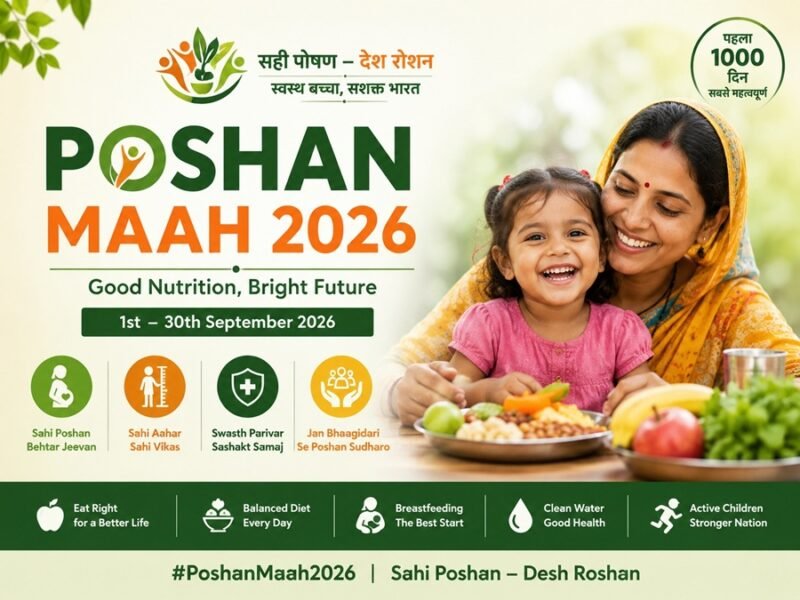
Every September, India observes Poshan Maah (National Nutrition Month) — a nationwide campaign aimed at tackling malnutrition and building healthier eating habits among children, women, and adolescents. If you’ve come across the term and wondered what it actually involves, here’s a complete, easy-to-understand breakdown.
What Is Poshan Maah?
Poshan Maah, also known as Rashtriya Poshan Maah (National Nutrition Month), is an annual awareness campaign run by India’s Ministry of Women and Child Development (MWCD) under the broader Poshan Abhiyaan (National Nutrition Mission).
- Observed every September, coinciding with the Prime Minister’s birthday month
- Falls under Mission Poshan 2.0 / Saksham Anganwadi and Poshan 2.0
- Focuses on mass awareness and community participation, not just policy — it’s designed as a “Jan Andolan” (people’s movement)
It’s important not to confuse Poshan Maah with Poshan Pakhwada, a related but separate fortnight-long campaign the same ministry runs, typically in March–April, with its own theme each year.
Why Was Poshan Maah Started?
Poshan Abhiyaan was launched by the Prime Minister on March 8, 2018, in Jhunjhunu, Rajasthan, as a multi-ministerial mission to place nutrition at the center of India’s development agenda. Poshan Maah was created as the flagship awareness drive under this mission, with clear goals:
- Reduce malnutrition among children, adolescent girls, and women
- Improve exclusive breastfeeding and complementary feeding practices
- Encourage community-level behavioral change around diet and hygiene
- Strengthen the role of Anganwadi Centers (India’s grassroots child and maternal care system)
According to India’s National Family Health Survey (NFHS-5), the prevalence of underweight children has declined over recent years — from 35.8% to 32.1% — a trend the government attributes partly to sustained nutrition campaigns like this one.
Key Focus Areas of Poshan Maah
Each year, the campaign highlights a set of priority themes. Recent editions have focused on:
- Reducing obesity – cutting down excess sugar and oil consumption
- Early Childhood Care and Education (ECCE) – under the “Poshan Bhi Padhai Bhi” initiative
- Infant and Young Child Feeding (IYCF) practices, including exclusive breastfeeding
- Men’s involvement in nutrition and caregiving – shifting nutrition from a “mother-only” responsibility to a shared family effort
- Tree plantation drives (“Ek Ped Maa Ke Naam”) linking environmental and nutritional wellbeing
What Actually Happens During Poshan Maah?
Poshan Maah isn’t just a symbolic observance — it involves large-scale, on-ground activity across the country:
- Anganwadi-led awareness sessions on diet, hygiene, and child care
- Swasth Balak Spardha (Healthy Child Competitions) at the community level
- Poshan Panchayats — local-level meetings involving community leaders
- Recipe-sharing campaigns like #Local4Poshan, encouraging people to share traditional, nutrient-rich recipes via MyGov
- Growth monitoring camps for children under Anganwadi services
- Screen-time reduction and early stimulation activities for young children
In past editions, participation has been massive — the 2022 campaign alone recorded over 170 million sensitization activities across the country.
Why Nutrition Awareness Still Matters in India
Despite steady improvement, malnutrition remains a significant public health challenge in India:
- Childhood stunting and being underweight are still prevalent in several states
- Anemia among women and adolescent girls remains a persistent concern
- Rising obesity and poor dietary habits are emerging as a dual burden alongside undernutrition
This is why campaigns like Poshan Maah continue year after year — nutrition-related behavior change takes sustained, repeated effort, not a one-time push.
How You Can Participate in Poshan Maah
You don’t need to work in healthcare or government to contribute. Here’s how individuals and communities typically get involved:
- Visit your local Anganwadi Center to learn about ongoing activities in your area
- Share nutrition awareness content on social media using official campaign hashtags
- Support NGOs working in child nutrition and health, such as CRY (Child Rights and You), which run year-round programs addressing malnutrition, especially in underserved communities
- Encourage healthy eating at home — simple steps like reducing sugar/oil intake and including traditional, nutrient-dense foods
- Volunteer for community health drives or awareness camps during September
FAQs: Poshan Maah
Q1. When is Poshan Maah celebrated?
Poshan Maah is observed every year throughout the month of September, coordinated by India’s Ministry of Women and Child Development.
Q2. What is the difference between Poshan Maah and Poshan Pakhwada?
Poshan Maah is a month-long campaign held in September, while Poshan Pakhwada is a separate fortnight-long campaign typically held in March–April. Both fall under the larger Poshan Abhiyaan mission but run at different times of the year with different annual themes.
Q3. Who runs the Poshan Maah campaign?
It is led by the Ministry of Women and Child Development (MWCD), implemented on the ground through Anganwadi Centers across states and union territories.
Q4. What is Poshan Abhiyaan?
Poshan Abhiyaan (also called the National Nutrition Mission) is the Government of India’s flagship program, launched in 2018, aimed at improving nutritional outcomes for children, adolescent girls, pregnant women, and lactating mothers.
Q5. How can NGOs help with nutrition goals like Poshan Maah?
NGOs working in child health and nutrition often run year-round, on-ground programs — from community education to direct nutrition support — that complement government campaigns like Poshan Maah, especially in remote or underserved areas.
Q6. Is Poshan Maah only about child nutrition?
No. While children are a major focus, the campaign also addresses maternal nutrition, adolescent girls’ health, anemia, and increasingly, men’s role in family nutrition and caregiving.
Final Thoughts
Poshan Maah is more than a government campaign — it’s a reminder that nutrition is a shared responsibility involving families, communities, and institutions working together. Whether it’s a small change at home, supporting your local Anganwadi, or backing an NGO doing ground-level nutrition work, every effort adds up to a healthier, better-nourished India.