


How To Frame A Steel Building
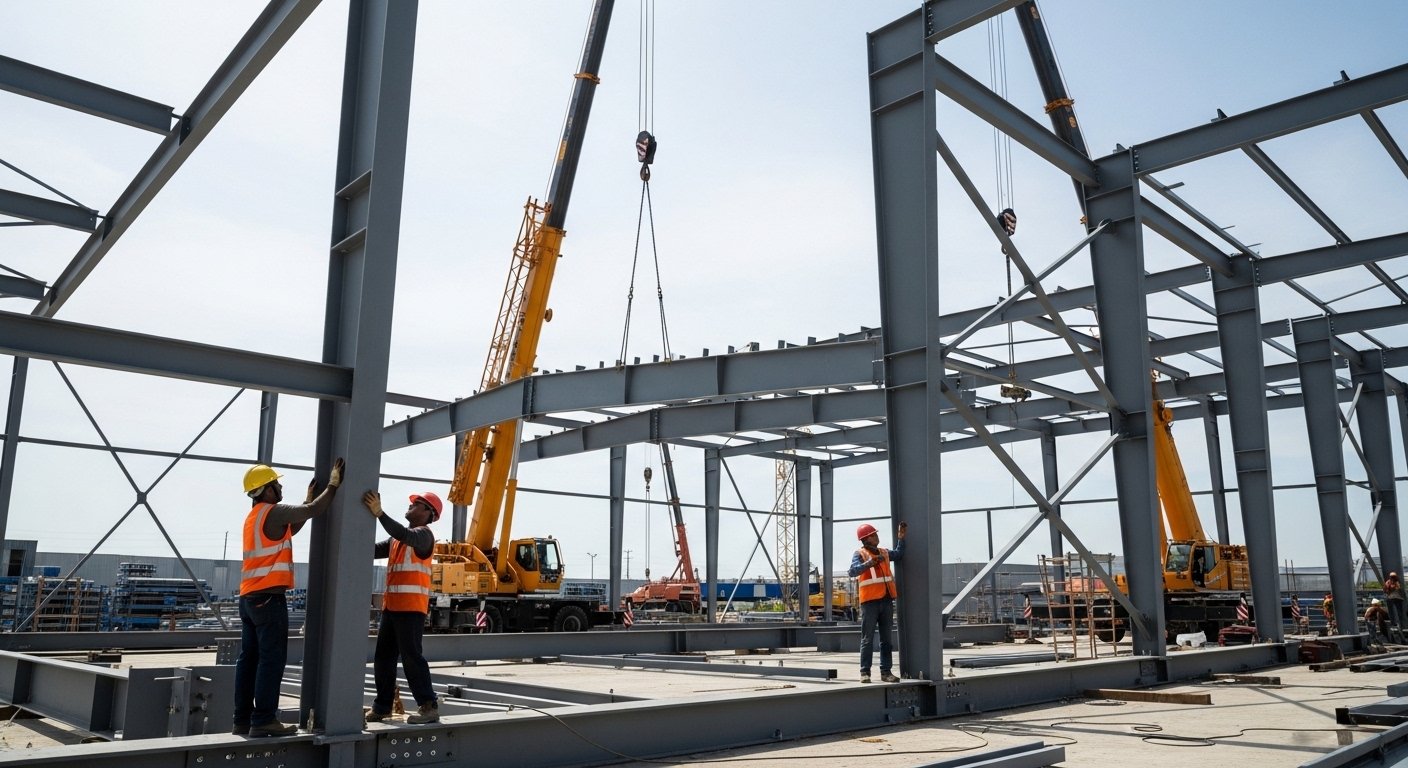
According to a recent study, 68% of builders find it difficult to use steel building framing because of faults in designs and misalignment. The process of framing a steel building entails the preparation of the foundation, creation of steel columns and beams, perfect alignment and stability through ensuring all structural ties.
Builders may end up experiencing structural misalignment as well as safety hazards without having the right knowledge of framing.
This manual includes all the framing actions, equipment, and methods to ensure that you create a robust and sound steel framework.
Understanding The Basics Of How To Frame A Steel Building
Steel building framing is a designed process wherein load-carrying components are brought together in a designed manner. The primary aim is to produce a robust structure that will be able to bear the whole building safely.
A steel frame typically consists of columns, beams, girts, and purlins. Such sections are attached to one another and evenly spread the load.
But it is not just assembly work that is referred to as framing. Other very important aspects of the process are measurement accuracy, leveling, and alignment.
Planning And Estimation Before Framing
Prior to commencing steel framing, there must be proper planning. At this phase, cost estimation, calculation of materials, and the schedule of the project are specified. To ease this step, many professionals rely on accurate takeoff services to assist with the required quantity analysis, material estimation, and project planning activities in a well-organized manner.
Site Preparation For Steel Building Framing
The initial physical activity in steel building framing is site preparation. Unless this is done in an appropriate manner, issues of alignment may arise in the future.
The following are some of the most important steps in site preparation:
- Leveling and compaction at the ground level.
- Load testing of soil.
- Marking foundation layout
- Correctly set anchor bolts.
To illustrate, when anchor bolts are not installed properly, columns will not fit properly. This is able to weaken the whole structure.
Structural Prep and Steel Quantities
The amount of steel required should first be calculated prior to commencing framing. This consists of verification of column, beam, and connector requirements. This is the reason why most projects make use of structural steel takeoff services, where calculation of materials, volume analysis, and planning are done in a systematic way.
How To Frame A Steel Building Step-By-Step
At this point, we will see the complete practical procedure in detail for how to frame a steel building.
1. Foundation Inspection
The foundation should be inspected prior to the onset of framing.
Make sure that:
- It has a flat surface.
- Anchor bolts are properly installed.
- Concrete is cured to perfection and tough.
Unless this step is taken, major structural issues may occur in the future.
2. Steel Columns Installation
The vertical system of support in the building is steel columns.
Process:
- Heavy lifting equipment to pick up the lift columns.
- Anchor bolt them.
- In the meantime, hold them in place.
Columns should be straight up. Even a slight inclination will have an impact on load balance.
3. Beam Placement And Connection
Beams that have been placed horizontally follow columns.
Main steps:
- Make columns parallel to beams.
- Use bolts or welding to connect them.
- Balance and check the level.
Beams assist in the distribution of load between columns and the stability of the structure.
4. Fitting Girts And Purlins
Secondary structural elements are girts and purlins.
- Girts support walls
- The roof has purlins.
These components aid in the distribution of weight and make the frame more stable.
5. Bracing System Installation
The steel structure is provided with its lateral stability through bracing.
Types include:
- Cross bracing
- Diagonal bracing
Without bracing, buildings are not able to withstand the wind or earth forces.
6. Alignment And Tightening Final
In the last stage:
- Bolts are all tightened.
- Checking of alignment is redone.
- Ultimate inspection is done.
This makes the structure secure and stable.
Common Mistakes In Steel Building Framing
The following are some of the pitfalls which should be avoided in framing:
- Wrong measurements
- Misaligned anchor bolts
- Missing bracing system
- Weak connection joints
- Ignoring safety rules
As an example, a minor error in the measuring can dislodge the entire structure.
Tools And Equipment Required For Steel Framing
Steel framing will need appropriate tools, such as:
- Lifting cranes
- Torque wrenches
- Tape, laser level measurements.
- Safety gear such as a harness and a helmet.
These devices enhance safety and accuracy in construction.
Safety Considerations In Steel Building Framing
Much attention is given to safety in steel construction work.
Important safety steps:
- Proper worker training
- Fall protection systems
- Safe lifting methods
- Regular site inspection
Nevertheless, the disregard of safety regulations may result in a crash and a traffic jam.
Factors That Affect Steel Building Frame Strength
The strength of a steel frame is based on a number of factors:
- Quality of material
- Strength of connections
- Load distribution design
- Environmental conditions
As an example, the space with high wind speeds might need additional support in bracing.
Why Accuracy Matters In Steel Building Framing
The best aspect of steel framing is the level of accuracy. When all is in good order:
- Even distribution of load.
- The structure is stabilized.
- Problems related to maintenance are minimized.
Conversely, the minor mistakes can cause structural damage on a long-term basis.
Conclusion
Framing a steel building is a technical task that requires planning, precision, and execution. The preparation of the site, the installation of columns, the placement of beams, the bracing system, and the final alignment were some of the things we learnt in this framework.
All the steps are significant in the construction of a robust and solid structure. Unless the issues of accuracy and safety are taken into account, there might be severe structural issues in the future.
Ultimately, a good steel building is not merely a matter of materials but also proper performance and meticulous building practices. This leaves us wondering how many structures we know of are constructed with complete accuracy and consideration.
FAQs
Which Is The Most Crucial Step In The Steel Building Framing?
Proper preparation of the foundation and laying of anchor bolts is the most crucial. When this is not accurate, then the whole structure may be brought out of context.
What Is The Time For Framing A Steel Building?
Time will vary according to the scale of the project. Small structures may require a few days and bigger structures may require a number of weeks.
What Are The Key Components Of A Steel Building Frame?
The primary components are columns, beams, girts, purlins, and bracing systems. These elements are all combined to form a stable structure.