

Why Healthcare Businesses Need Salesforce Integration
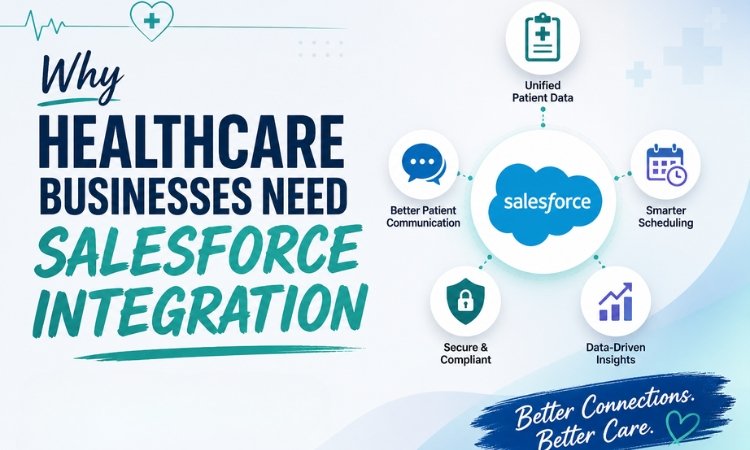
Healthcare systems are evolving at an extraordinary pace. What once relied heavily on manual records and isolated systems has now transformed into a data-driven environment. Yet, despite technological advancements, many healthcare organizations still struggle with disconnected platforms.
This fragmentation creates inefficiencies. It slows down processes and affects patient care. In such a scenario, salesforce integration emerges as a powerful solution that connects systems and simplifies operations.
Modern healthcare demands precision, speed, and personalization. Without a unified system, achieving these goals becomes increasingly difficult. Integration is no longer a luxury—it is a necessity.
Challenges Faced by Healthcare Organizations
Healthcare providers face persistent challenges that impact both operational performance and patient satisfaction. One of the most significant issues is data fragmentation. Patient information often resides in multiple systems, making it difficult to access a complete and accurate record when needed.
Communication gaps further complicate the situation. Different departments use separate tools, leading to delays and miscommunication. This lack of synchronization can directly affect patient outcomes.
Compliance and data security also remain critical concerns. Healthcare organizations must adhere to strict regulations while safeguarding sensitive patient information. Managing this balance is not simple.
Additionally, patient expectations have changed. Individuals now expect seamless communication, personalized care, and quick responses. Without integrated systems, meeting these expectations becomes a challenge.
Understanding Salesforce Integration
At its essence, salesforce integration is the process of connecting Salesforce with other systems to enable smooth and continuous data exchange. It bridges the gap between various platforms such as EHR systems, billing tools, and communication channels.
This connection is made possible through APIs and middleware, which act as intermediaries that allow systems to communicate efficiently. Instead of working in isolation, systems become part of a cohesive network.
The result is a unified ecosystem. Data flows effortlessly. Information becomes accessible in real time. This interconnected structure is particularly valuable in healthcare, where timely and accurate data is crucial.
Benefits of Salesforce Integration
The advantages of integrating Salesforce into healthcare systems are substantial. One of the most notable benefits is centralized data management. With all patient information available in one place, healthcare providers can access complete records without switching between systems.
Patient experience also improves significantly. Integrated systems enable timely communication, automated reminders, and personalized interactions. These enhancements create a more engaging and satisfying experience for patients.
Operational efficiency sees a marked improvement as well. Automation reduces manual tasks, minimizes errors, and accelerates workflows. This allows healthcare professionals to focus more on patient care rather than administrative duties.
Real-time insights provide another layer of value. With access to up-to-date data, organizations can make informed decisions quickly. This leads to better planning and improved outcomes.
Security and compliance are strengthened through integration. Advanced systems can be designed to meet regulatory requirements while ensuring data protection. This builds trust and reduces risk.
Practical Use Cases in Healthcare
The application of salesforce integration in healthcare is both broad and impactful. In patient management, it enables a comprehensive view of each individual, allowing providers to deliver personalized care.
Appointment scheduling becomes more efficient with automation. Patients receive reminders, reducing missed appointments. Staff can manage schedules with greater ease and accuracy.
Integration with Electronic Health Records ensures that patient data is always current. This eliminates redundancy and improves clinical decision-making.
Billing processes also benefit from integration. Insurance claims, invoicing, and payment tracking become streamlined, reducing administrative workload and errors.
Role of Salesforce Development Services
Implementing integration requires a tailored approach. This is where salesforce development services play a crucial role. These services focus on customizing Salesforce to align with the unique needs of healthcare organizations.
Through salesforce custom development, systems can be designed to handle specific workflows, compliance requirements, and operational complexities. This ensures that the integration is both effective and scalable.
Additionally, salesforce integration consulting helps organizations identify the best strategies for connecting their systems. Expert insights guide the process, reducing risks and improving outcomes.
CloudMetic has experience in delivering such solutions with a focus on clarity and efficiency. The emphasis remains on building systems that are practical, adaptable, and aligned with real-world healthcare needs.
Choosing the Right Salesforce Implementation Partner
Selecting the right salesforce implementation partner is a decision that carries long-term implications. The success of integration depends heavily on the expertise and approach of the partner.
Experience in healthcare is particularly important. A partner with industry knowledge can better understand challenges and deliver effective solutions.
Reliability and scalability should also be considered. Integration is not a one-time effort. It requires continuous monitoring and optimization.
Working with a provider that offers comprehensive salesforce consulting services ensures that organizations receive ongoing support and strategic guidance.
Future Trends in Healthcare Integration
The future of healthcare is being shaped by rapid technological advancements. Integration will continue to play a central role in this transformation.
Artificial intelligence is becoming increasingly influential. Integrated systems enable AI-driven insights that enhance diagnosis, treatment, and patient engagement.
Predictive analytics allows organizations to anticipate needs and optimize resources. This proactive approach improves efficiency and outcomes.
Digital transformation is accelerating across the industry. As healthcare organizations adopt new technologies, integration will remain the foundation that supports innovation and growth.
Conclusion
Healthcare organizations operate in a complex and demanding environment. Disconnected systems, data silos, and inefficiencies can hinder both operations and patient care.
Salesforce integration provides a solution by creating a unified and efficient ecosystem. It centralizes data, improves communication, and enhances decision-making.
With the support of salesforce development services and the guidance of a skilled salesforce implementation partner, healthcare businesses can navigate challenges more effectively.
As the industry continues to evolve, integration will remain essential for delivering better care and achieving sustainable growth.