

What Age Should Kids Start Reading Comics?
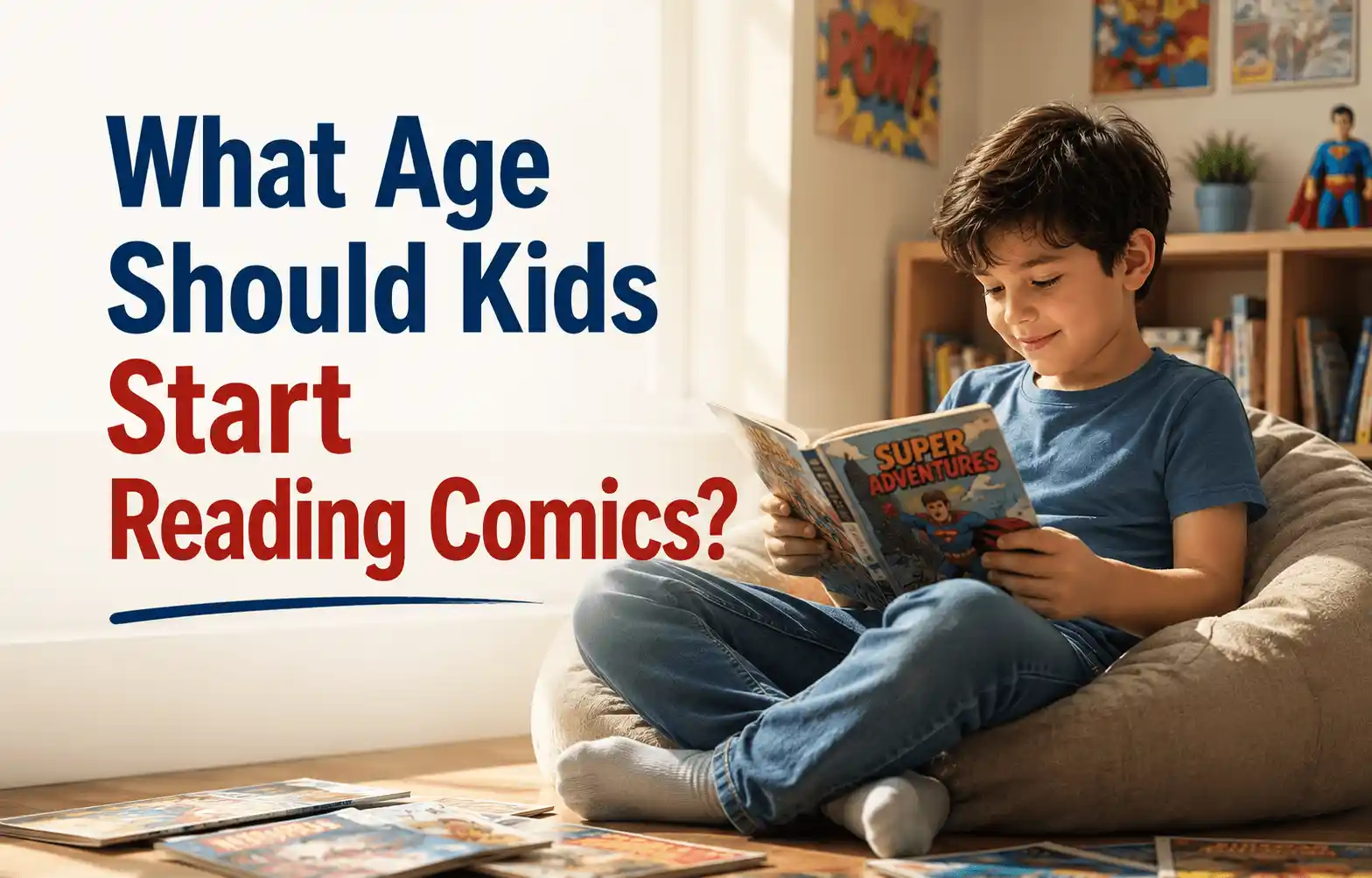
There’s no need to worry if your child isn’t reading comics yet. There are many reasons why they should. Firstly, comics are a great way to develop reading skills, improve children’s creativity and imagination, and build important character traits such as empathy, kindness, and problem-solving. In this blog, we will discover the right age for kids to start reading stories.
The answer to the question of when kids can begin to enjoy comics is actually sooner than many parents may think. Even toddlers can engage with storybook panels, follow simple storylines, and identify characters by their names. As children grow older, more complex story lines, multiple character types, and different types of humor will be introduced.
The Benefits of Comics for Children
By turning reading into something enjoyable, comics let kids learn without feeling like homework.
Comics are like tiny adventure books that provide kids with the ability to look at pictures, read about an adventure, and learn new vocabulary. All this happens without making them feel like they are learning. Evidence shows that children who read stories have a higher level of reading comprehension and read more quickly than those who read ‘standard’ books.
Many of these high-quality, age-appropriate comics are created by professional comic book publishing services, which ensure the stories are engaging, colorful, and suitable for children.
Random Fun Fact
Kids remember stories better than traditional books because their brains connect words to illustrations. In this way, they remember it for a long time.
In addition to providing learning opportunities, it can also offer social experiences for children. Characters are portrayed as heroes, demonstrating qualities such as courage, cooperation, teamwork, and problem-solving. Even a silly superhero who trips over their own cape can show children that making mistakes is okay.
Reading comics helps develop empathy in children. They can see and identify with how story characters feel, which allows them to begin to understand feelings in their own lives.
When selecting a story for your child, select one that matches the child’s age. Younger children may prefer simple plots told through colorful illustrations, whereas older kids will prefer longer stories portrayed through funny dialogues and jokes.
What Age Should Kids Start Reading Comics?
The short answer is that it depends on the child. However, some general rules can still be applied.
1. Age 3-5
Picture-Heavy Books with Easy Stories
Let your child start at whatever point in the story they want to. You can help by pointing out the characters and reading out loud with your child.
2. Age 6-8
Shorter Stories with Basic Words
Help your child start reading shorter sentences and ask them a question about what has happened so far.
3. Age 9-12
Longer Stories with Lots of Humor and Light Adventure
Your child should be able to read by themselves. Encourage them to have a conversation about the characters and the lessons they learned.
4. Age 13+
More Complex Comics with Adult Themes
Your teenager will be able to read a series of comics and figure out the punch line, as well as follow a story that is made up of several storybooks.
Tips for Parents:
- Use bright and colorful panels to attract children’s attention.
- Select comics that provide positive lessons and characters that teach you in a positive way.
- Allow your child to select the character that they prefer because this helps to motivate.
- Read with your child at first, and also allow them to read to you.
How to Choose the Right Comic for Your Child
Choose a comic that is according to your child’s age, interests, and reading ability.
- Make sure it has an appropriate and simple-to-follow story.
- Bright, clear panels help children better understand the comic’s story.
- Ask an expert, like a children’s publishers or read reviews before making your selection. Experts can suggest a comic title according to the child’s age.
- Comics with single-panel or text-to-illustration cartoon-style can often help children develop their reading skills.
- Comics with funny or humorous storylines can provide social lessons.
Comics published by professional children’s book publishers typically contain quality illustrations and age-appropriate content. This is why parents can trust that the comic they are purchasing is safe and enjoyable for their child.
Tips for Parents:
- Encourage your child to choose comic characters or themes that interest them.
- Do not choose the one that contains large paragraphs of text for younger children.
- Mix educational comics in with fun ones, so children will connect learning with fun.
What Are the Benefits of Reading Comics Early?
Reading comics helps children learn, laugh, and grow all at the same time.
Key Benefits
1. Boosts Reading Skills
It provides both text and graphics. This allows children to learn to recognize words more quickly and understand how stories work more easily.
2. Increases Imagination
Superheroes, crazy talking animals, and fantasy worlds encourage children’s imaginative thinking and inspire them to create their own ideas.
3. Offers Social Skills
Because the characters in comic books, usually superheroes, show teamwork, kindness, and problem-solving skills. Children witness socially responsible behavior on a continual basis.
4. Promotes Empathy
By seeing how the characters feel, children can learn to identify their own feelings as well as those of others.
5. Fun and Motivating for Kids
Children who struggle with traditional reading materials often enjoy them because of their fun elements. Children will learn without even realizing it.
Fun Fact
Research shows that children who read comics on a daily basis have a better chance than non-comic readers of developing a lifelong habit of reading. This will benefit them throughout school and into their adult lives.
The Ending Notes
Comics have a lot more potential than just being enjoyable. They are also great ways to improve creativity and learning, and to introduce laughter into life.
It provides children with opportunities to develop their imagination and language skills through early exposure. Children can continue to develop their reading and writing skills as they move from simpler to more complex types of comics.
The best way of selecting appropriate storybooks for children is to consider both the child’s age and interests. Colorful illustrations, engaging stories, and positive messages can help children find the enjoyment and meaning in reading.