
How Leather Finishing Techniques Affect Quality and Appearance
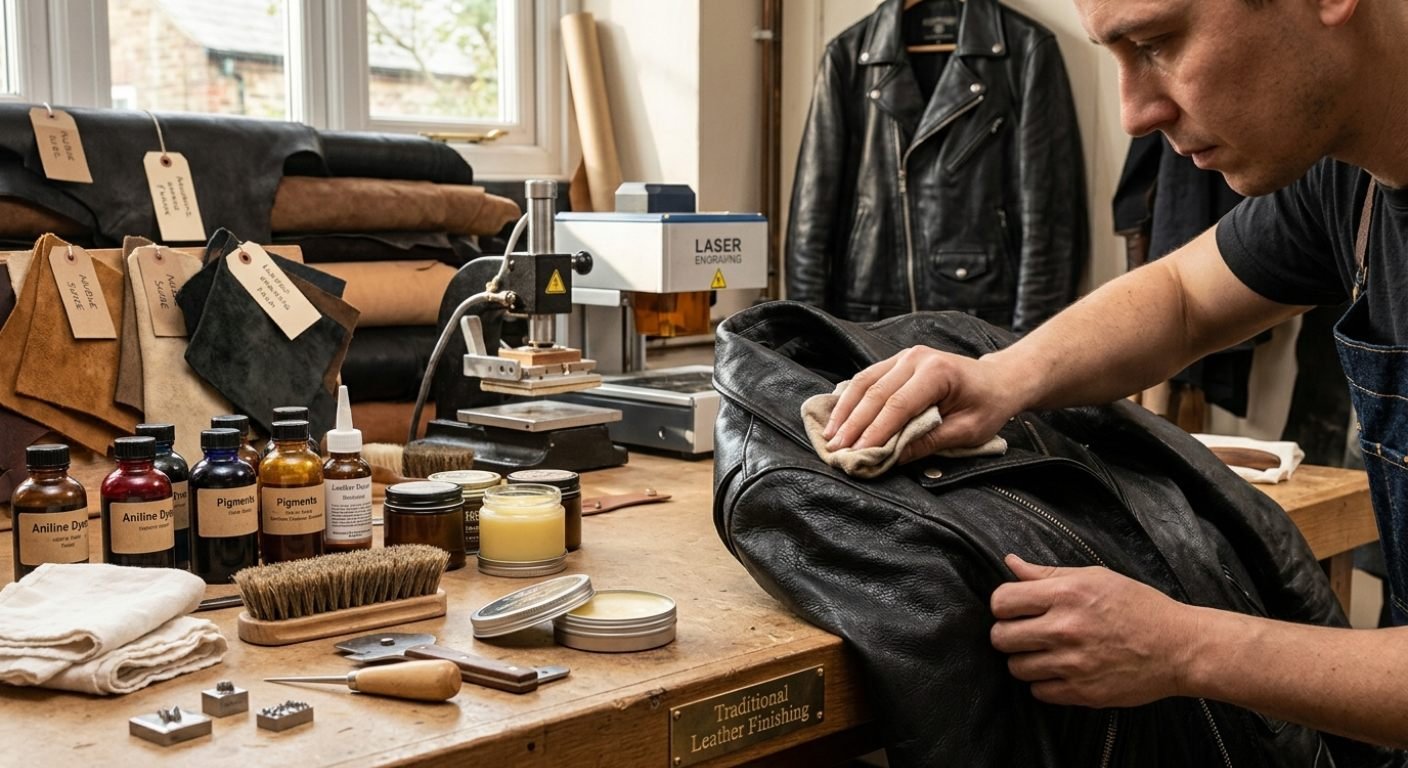
Leather is among the most durable and versatile materials on earth, but the skin that comes out of a tanning factory can be regarded as only a half-product. The characteristics that define the end quality, feel, strength, and even commercial value of leather are determined through the leather surface finishing process that follows. This process, regardless of whether you choose a fancy purse, a biker jacket, or leather dress shoes, will determine what type of leather surface finishing qualities your purchase will have.
In this article, we will review all major leather surface finishing techniques currently used in leather production, how they impact the qualities of leather goods, and how you can benefit as a consumer of leather items.
Importance of Leather Finishing
Vegetable tanning makes the leather highly susceptible to stains, water damage, and fading. The various leather finishing techniques help overcome these challenges while at the same time improving its appearance. As per the data available with the Leather Working Group, more than 85% of finished leather used throughout the world goes through some surface treatment process.
It not only improves the appearance of leather but also contributes in:
- Resistance to scratches and wear
- Flexibility and softness
- Depth and color retention
- Resistance to water and stains
- Breathability
| Finish Type | Durability | Natural Look | Breathability | Best For |
| Aniline | Low | High | Excellent | Luxury goods, furniture |
| Semi-Aniline | Medium | High | Good | Premium bags, upholstery |
| Pigmented | High | Low | Moderate | Automotive, workwear |
| Waxed | Medium-High | Medium | Low | Boots, outdoor gear |
| Nubuck | Low-Medium | Very High | Excellent | Premium footwear, gloves |
| Suede | Low | Very High | Excellent | Fashion, casual accessories |
Major Leather Surface Finishing Methods Explained
1. Aniline Leather Finish
The aniline leather finish is considered the most natural and premium option in modern leather finishing. Hides are dyed using soluble aniline dyes that penetrate deeply into the leather fiber, preserving the original grain texture, natural markings, and suppleness of the hide.
Because aniline-finished leather uses no pigment coating on the surface, it offers exceptional breathability and develops a rich patina over time. However, it is also the most susceptible to stains and fading, which is why it is typically reserved for high-end furniture, luxury handbags, and designer footwear where aesthetics take priority over heavy-duty use.
2. Semi-Aniline Leather Finish
The semi-aniline leather finish bridges the gap between pure aniline and fully pigmented leather. It starts with an aniline dye base but adds a thin protective topcoat of pigment, which gives the leather a more uniform appearance while retaining much of its natural texture and character.
This finish is extremely popular among premium bag manufacturers and automotive interiors, where both beauty and moderate durability are required. It offers better resistance to soiling compared to pure aniline, without sacrificing the softness and visual depth that consumers expect from high-quality leather.
3. Pigmented Leather Finish
The pigmented leather finish is the most widely used leather surface detailing method in commercial production. A layer of polymer-bound pigments is applied to the surface, completely covering the natural grain. The result is a consistent, uniform color across the entire hide.
Industry data suggests that pigmented leather accounts for approximately 70 to 80% of all leather produced for upholstery and mass-market fashion goods globally. The thick topcoat makes it highly resistant to scratches, UV fading, and moisture. However, it sacrifices breathability and the premium, natural aesthetic that aniline finishes provide.
4. Waxed Leather Finish
The waxed leather finish, also referred to as pull-up leather, uses waxes and oils embedded into the hide. When pressure or heat is applied, the wax migrates, creating distinctive lighter marks that give the leather a characterful, worn look that many consumers find highly desirable.
This finish is particularly popular in leather craftsmanship methods for boots, belts, and workwear goods. The wax layer also provides a natural level of water resistance, making it well-suited for outdoor products and rugged applications.
5. Nubuck Leather Finishing
Nubuck leather finishing involves buffing the grain side of the hide (the top surface) to create a fine, velvety texture. Unlike suede, which is made from the split underside of the hide, nubuck retains the superior strength of the grain layer. This makes it more durable than suede while maintaining a luxurious, soft appearance.
Nubuck is used extensively in premium footwear and high-end upholstery. Because of its open-fiber surface, it requires regular treatment with specialized protectors to prevent staining.
6. Suede Leather Finishing
The Suede leather finishing creates the iconic soft, napped texture by sanding the flesh (inner) side of the hide. Suede is popular in fashion garments, casual shoes, gloves, and accessories. While it has a beautiful, tactile quality, suede is among the least durable options in the leather-processing toolkit, making it best suited for decorative and fashion-forward applications rather than for functional workwear.
The Role of Texture: Understanding What Is Embossing in Leather
Beyond color and protective coatings, leather surface detailing also involves texture manipulation. One of the most widely used decorative techniques in leather manufacturing is embossing. So, what is embossing? In simple terms, embossing presses a heated die or plate into the leather surface to raise a pattern or texture above the base level. It is used to simulate exotic grain patterns such as crocodile, python, or ostrich on cowhide leather, significantly reducing cost while achieving premium aesthetics.
Embossing is a key part of modern leather finishing because it allows manufacturers to add brand logos, decorative motifs, and textured patterns to virtually any leather type. High-end fashion houses and accessories brands use embossing extensively to reinforce brand identity directly on the leather surface.
| Technique | Direction of Pattern | Visual Effect | Common Use |
| Embossing | Raised above surface | Pattern stands out | Logos, exotic grain simulation |
| Debossing | Pressed into surface | Pattern recessed | Monograms, branding, book covers |
| Hot Stamping | Pressed with foil | Metallic or colored | Luxury accessories, branding |
| Laser Engraving | Material removed | Precise, fine detail | Premium goods, personalization |
Table 2: Leather Texture and Decorative Techniques Compared
Matte vs. Glossy Leather Finishes
The final topcoat applied during the leather manufacturing process determines whether the product has a matte or glossy appearance. Both are achieved through the type of lacquer or topcoat used during the final leather treatment process stage.
- Matte leather finish: Absorbs light, giving a sophisticated, understated look. Common in modern fashion accessories and minimalist goods.
- Glossy leather finish: Reflects light for a polished, high-shine appearance. Often associated with formal footwear, patent leather, and high-fashion garments.
The choice between matte and glossy is not purely cosmetic. Glossy topcoats tend to be more resistant to surface moisture but can show scratches more visibly. Matte finishes are more forgiving in daily use but may require more frequent conditioning.
Distressed Leather Finish: Crafted Aging
The distressed leather finish replicates the look of aged, worn leather through intentional surface treatments including tumbling, waxing, and hand-rubbing. It is one of the most popular aesthetics in modern leather craftsmanship methods, particularly for motorcycle jackets, vintage bags, and Western-style boots.
Distressed leather achieves a lived-in quality that consumers associate with authenticity and durability. Contrary to popular belief, a well-executed distressed finish does not indicate lower quality. Many premium leather goods brands intentionally distress their products as part of the design language.
Leather Finishing Industry at a Glance
| Metric | Data Point | Source / Context |
| Global leather goods market size (2024) | $414 billion | Statista, 2024 estimate |
| Share of pigmented leather in production | 70-80% | Leather Working Group report |
| Premium aniline leather price premium | 30-50% over pigmented | Industry average, luxury segment |
| Embossed leather products growth rate | ~6.2% CAGR (2022-2027) | Market research estimates |
| Nubuck vs suede durability advantage | Nubuck 40% more abrasion-resistant | Material science comparison data |
Table 3: Key Statistics in Leather Finishing Industry
Frequently Asked Questions
Can genuine leather be embossed?
Yes. Genuine leather, full-grain leather, and top-grain leather can all be embossed. The embossing process uses heat and pressure to permanently alter the surface texture. Full-grain leather yields the most durable and precise embossing results because of its dense, intact fiber structure.
How much does it cost to emboss leather?
The cost of embossing leather varies significantly based on the method and scale. For industrial die embossing on production runs, costs typically range from $0.50 to $5 per unit. Custom die creation can cost anywhere from $200 to $1,500 depending on complexity. For artisan hand-embossing on bespoke goods, costs are labor-intensive and priced accordingly.
What is the difference between emboss and deboss?
The primary difference lies in the direction of the impression. Embossing raises the pattern above the leather surface, while debossing presses the pattern into the surface, creating a recessed imprint. Both use similar die-and-pressure techniques.
Is it better to engrave or emboss leather?
It depends on the application. Embossing is generally preferred for leather because it preserves the material integrity, does not remove any fibers, and produces a tactile, three-dimensional result. Laser engraving is ideal for very fine detail work or precise logos but involves removing material, which can weaken the leather surface in some cases. For most branding and decorative purposes on leather goods, embossing remains the industry-preferred method.
Conclusion
The leather finishing techniques applied to a hide are what transform a raw material into a refined, functional, and visually compelling product. From the natural luxury of aniline leather to the robust durability of pigmented finishes, from the velvety nap of nubuck to the tactile elegance of embossed surfaces, every leather surface finishing method carries its own set of trade-offs between beauty, durability, and cost.
Understanding these leather quality finishing choices empowers buyers to make smarter purchases, helps designers select the right materials for their products, and gives industry professionals a shared vocabulary for evaluating leather craftsmanship methods across markets.
Whether you are exploring the fundamentals of leather texture finishing or diving deep into decorative techniques such as embossing, the knowledge of how the leather treatment process works from start to finish is what separates informed consumers from everyone else. For more in-depth reading on decorative leather techniques, explore the complete guide to Emboss vs Deboss Leather to understand how surface design decisions shape the identity of premium leather goods.