
How Automated Data Governance Improves Security, Compliance, and Operational Efficiency
As organizations create, share, and store more information across cloud platforms, file servers, collaboration tools, and employee devices, managing that data manually becomes increasingly difficult. Teams need to know where sensitive information is stored, who can access it, how long it should be retained, and whether it is being handled according to internal policies and regulatory requirements.
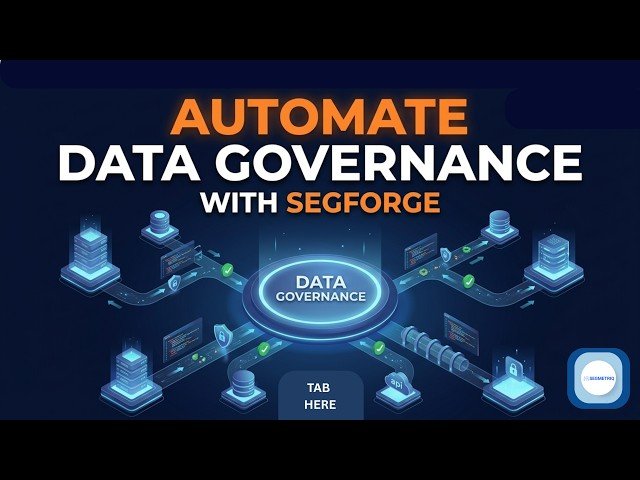
This is where automated data governance becomes valuable. Instead of relying entirely on employees and IT teams to identify risks and enforce policies manually, automation can continuously analyze data, apply governance rules, and surface potential issues.
For businesses managing large volumes of content, platforms such as Egnyte can help bring governance, security, and content management into a more centralized workflow.
What Is Automated Data Governance?
Automated data governance is the use of technology to automatically identify, classify, monitor, protect, and manage organizational data according to predefined policies.
Traditional data governance often depends on manual audits, spreadsheets, periodic reviews, and employees following established procedures. While these approaches can work at a smaller scale, they become difficult to maintain as data volumes and regulatory requirements increase.
Automated governance allows organizations to establish rules for different types of information and apply those rules consistently. For example, a company may automatically identify sensitive documents, restrict access based on user roles, flag unusual activity, or enforce retention policies.
The goal is not simply to automate administrative tasks. It is to create a more consistent and proactive approach to managing data throughout its lifecycle.
How Does Automated Data Governance Improve Security?
Security is one of the most important benefits of automated governance because organizations cannot effectively protect information they cannot identify or understand.
Automation can help discover sensitive or confidential information across distributed repositories. Once data is identified and classified, organizations can apply appropriate access controls and security policies.
For example, financial records, customer information, intellectual property, and confidential business documents may require different levels of protection. Automated classification can help distinguish these types of information and support more appropriate security controls.
Automation can also help identify unusual access patterns. If a user suddenly downloads a large number of sensitive files or accesses information outside their normal behavior, automated monitoring can help security teams investigate the activity sooner.
This reduces dependence on periodic manual reviews and gives organizations greater visibility into potential risks.
How Automated Data Governance Supports Compliance
Compliance becomes challenging when organizations have large amounts of data spread across different systems.
Regulations and industry standards may require businesses to control access to sensitive information, maintain records, follow retention requirements, and demonstrate that appropriate safeguards are in place.
Automated data governance can help organizations apply these requirements more consistently.
For instance, automated policies can identify sensitive content and help enforce retention or access rules. Organizations can also maintain records of governance activities that support audits and compliance reviews.
This does not mean automation makes an organization automatically compliant. Compliance still requires appropriate policies, processes, oversight, and human judgment. However, automation can make those processes more consistent and easier to manage.
How Does Automation Improve Operational Efficiency?
Manual data governance consumes considerable time. Employees may need to review files, identify sensitive information, verify permissions, check retention requirements, and prepare reports.
When these activities are automated, teams can spend less time on repetitive administrative work.
Automation can also reduce inconsistencies. A manually managed governance process may depend on individual employees remembering to follow specific procedures. Automated policies can apply the same rules across relevant data without relying on someone to perform each action manually.
This becomes particularly important as organizations grow. A governance process that works for a few thousand documents may become impractical when the organization manages millions of files.
Automated Data Classification Makes Governance More Scalable
Data classification is a fundamental part of effective governance. Organizations need to understand what information they have before they can determine how it should be protected.
Automated classification can analyze content and identify information according to predefined categories or policies. Instead of asking employees to manually label every document, organizations can use automated processes to identify potentially sensitive content at scale.
This can improve visibility while reducing the workload placed on employees.
It can also provide a stronger foundation for other governance activities because classification information can be used to determine access, retention, security, and compliance requirements.
Reducing Data Exposure and Access Risks
Excessive permissions are a common governance challenge. Employees may accumulate access to files and folders that they no longer need, while sensitive information can remain accessible to a broader group than necessary.
Automated governance can help organizations identify these situations and support more effective access management.
By connecting data classification with permissions and user activity, organizations can gain a clearer understanding of who has access to sensitive information and whether that access is appropriate.
This supports the principle of least privilege, where users receive only the access they need to perform their responsibilities.
Automated Retention and Data Lifecycle Management
Keeping data forever can create unnecessary security, compliance, and storage risks. At the same time, deleting information too early can create legal or operational problems.
Automated governance can help organizations manage this balance through data lifecycle policies.
Organizations can establish rules that determine how long particular types of information should be retained and what should happen when the retention period ends.
Automating these processes can make retention management more consistent and reduce the risk of forgotten or unnecessary data accumulating across the organization.
The Role of Egnyte in Automated Data Governance
For organizations managing large amounts of business content, a centralized platform can simplify the connection between content management, governance, and security.
Egnyte provides capabilities designed to help organizations manage and protect content across distributed environments. Its approach can help businesses gain greater visibility into their data while supporting security and governance processes.
The important consideration is not simply whether an organization has a governance platform. The real value comes from connecting data visibility, classification, access controls, security monitoring, and lifecycle policies into a practical governance strategy.
What Should Organizations Look for in Automated Data Governance?
An effective solution should provide more than automated classification. Organizations should consider how well the platform supports their complete data governance lifecycle.
Visibility is essential because teams need to understand where information exists and what types of data they are managing. Classification helps identify sensitive or regulated information, while access controls help ensure that only appropriate users can reach it.
Monitoring and reporting are equally important because governance teams need to identify risks and demonstrate that policies are being followed.
Scalability should also be considered. The solution needs to work effectively as data volumes, users, applications, and business requirements change.
Frequently Asked Questions
What is automated data governance?
Automated data governance uses software and predefined policies to identify, classify, monitor, protect, and manage organizational data with less manual intervention. It helps organizations apply governance rules consistently across large and distributed data environments.
Why is automated data governance important?
Automated data governance helps organizations improve data security, support compliance requirements, reduce manual work, and manage information more consistently. It becomes especially valuable as the volume and complexity of organizational data increase.
Can automated data governance improve data security?
Yes. Automated governance can help identify sensitive information, monitor data activity, manage permissions, and apply security policies consistently. These capabilities can help organizations reduce unnecessary exposure and identify potential risks earlier.
Does automated data governance guarantee compliance?
No. Automation can support compliance by enforcing policies, maintaining visibility, and reducing manual errors, but it does not guarantee compliance. Organizations still need appropriate policies, controls, oversight, and processes.
How does automated data governance improve efficiency?
It reduces repetitive tasks such as manual classification, permission reviews, retention management, and data monitoring. This allows IT, security, and compliance teams to focus more on higher-value activities.
Conclusion
As data environments become larger and more distributed, manual governance becomes increasingly difficult to maintain. Automated data governance provides a more scalable way to manage information by combining data visibility, classification, security controls, compliance processes, and lifecycle management.
The biggest advantage is consistency. Instead of relying solely on employees to identify risks and follow governance procedures, organizations can use automated policies to continuously manage data according to established requirements.
For businesses looking to strengthen both content security and governance, solutions such as Egnyte can provide a foundation for managing information more effectively while reducing the operational burden associated with manual data governance.