


What Makes an Automated Sortation System a Smart Investment for Growing Businesses
When businesses expand, dealing with more orders while still ensuring fast and accurate processing becomes a difficult task. Manual sorting systems are not able to deal effectively with these situations and can cause bottlenecks and mistakes, along with raising costs associated with operations.
An automated sorter offers an ideal solution in tackling such issues, as it makes the flow of goods smooth within the warehouse facility. It also increases speed in routing the packages while ensuring consistency throughout the process, even under high-demand times. In growing organisations, choosing the appropriate sortation system not only improves efficiency but also allows operations to scale up.
Why Do Growing Businesses Need Smarter Sorting Capabilities?
As order quantities grow, sorting emerges as one of the most important processes within a warehouse. The automation of the sorting process guarantees that goods are correctly sorted to their intended location in a timely and error-free manner. This has a direct influence on the efficiency of the order processing in the warehouse.
Ineffective sorting can result in congestion within important parts of the warehouse, making the whole process of work much slower. This approach will function well on a small scale, but things become quite challenging once the complexity grows. The automation of the whole process creates consistency, thus enabling a business to function in any circumstances, including during demand fluctuations.
How Does an Automated Sorter Improve Throughput and Accuracy?
An automated sorter plays a key role in facilitating faster and more accurate operations in warehouse environments. By minimising the need for manual intervention, it guarantees that the processing of goods takes place at a constant rate, with minimal interruptions.
- Real-time routing allows items to be directed to the correct zones without delays
- Reduced manual handling lowers the chances of sorting errors
- Continuous flow of goods improves overall throughput across operations
- Consistent performance ensures predictable output even during peak periods
These enhancements will assist organisations in providing their services at a satisfactory level despite the increased volume. With growth in operations, such efficiency will be crucial to prevent any problems from arising in the future.
What Role Does Sorting Play in Managing Returns Efficiently?
Returns processing is equally complicated as order fulfillment. The returns management system coordinates with the sorting process to make sure that returns are processed efficiently and effectively at various stages within the warehouse.
If there is poor management of returns, it may lead to confusion, delays, and increased expenses. Proper sorting will guarantee that the returned products will be channeled to the inspection, restocking, or disposal departments immediately, thus reducing the process time and ensuring effective tracking of returned items.
Why Integration Between Sorting and Returns Matters
With a connection between sorting systems and return processes, it will be much simpler to control product movement without human intervention. It increases accuracy, ensuring that the returned products are processed immediately, allowing companies to run their operations smoothly across both forward and reverse logistics.
What Factors Make Sortation Systems Scalable for Growth?
An automated sorter must be designed with future growth in mind. Scalability entails more than the ability to manage an increase in volume. It involves adapting to shifting business environments, operational difficulties, and customer demands.
Thanks to a flexible design, businesses can grow their operations without significant interruptions. The compatibility of the sorting system with other automation technologies ensures consistency with the general warehouse processes. A modular setup facilitates easy incorporation of additional capabilities as needs arise, which means there will be no need of costly system redesigns.
How Addverb Enables Efficient Sortation and Returns Handling
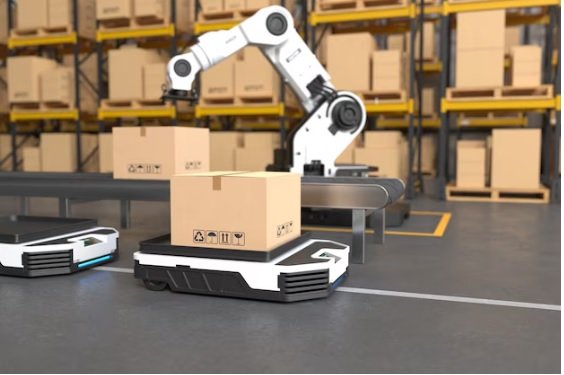
Addverb’s solutions, such as its Robotic Sorter, Zippy, are designed to support high-speed, accurate sorting across different warehouse environments. One of the variants, Zippy 40, is an ultra-fast-moving robot that can handle a payload of 40 kg at a speed of 2 m/s, allowing businesses to manage growing volumes while maintaining consistent performance across operations.
The integration with the returns management system guarantees efficient processing of the returns. With this integration, it is possible for organisations to manage both outbound and reverse logistics.
Conclusion
Choosing an appropriate sorting system is crucial for organisations that want to grow efficiently. The automated sorter can increase efficiency in terms of speed and precision, which makes it an excellent choice for contemporary warehouse operations.
Combined with the returns management system, it also helps in managing reverse logistics in an effective manner. The sorting and automation solutions provided by Addverb help companies develop a business process that is efficient, flexible, and scalable for the future.