

How Real World Asset Projects Can Build Strong Investor Demand
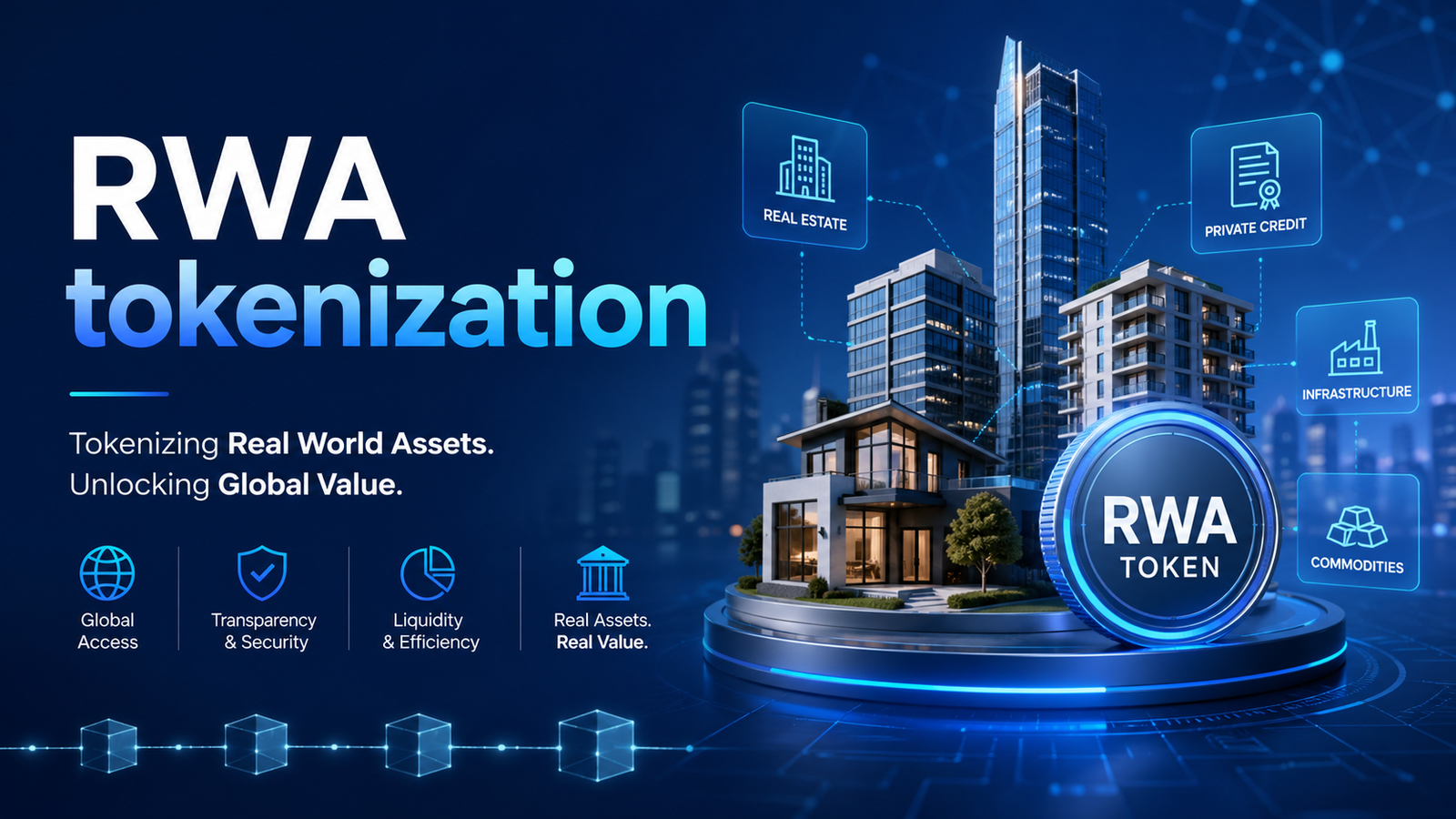
Real World Asset (RWA) projects are becoming a significant bridge between traditional finance and blockchain ecosystems. By connecting tangible assets such as real estate, commodities, invoices, treasury instruments, and infrastructure with blockchain-based tokens, these projects introduce new ways of generating value, liquidity, and accessibility.
However, technological innovation alone does not guarantee investor participation. Strong investor demand is built through a combination of trust, utility, transparency, economic design, and market positioning. Without these elements, even well-structured RWA projects struggle to gain traction beyond early adopters.
Understanding how investor demand forms in this space requires looking at both financial behavior and blockchain-native expectations. Investors today evaluate not only returns but also liquidity pathways, risk transparency, governance mechanisms, and long-term ecosystem sustainability.
Understanding Investor Demand in Real World Asset Ecosystems
Investor demand in RWA projects is shaped by a mix of traditional investment logic and digital asset behavior. Unlike purely speculative crypto tokens, RWA investments are anchored in underlying physical or financial assets. This creates a different expectation framework.
Investors typically evaluate:
- Stability of underlying assets
- Transparency of valuation and auditing
- Liquidity of tokenized instruments
- Regulatory clarity and compliance structure
- Yield generation mechanisms
- Long-term sustainability of returns
Demand increases when these factors align in a predictable and transparent system. When they do not, investor hesitation grows regardless of technological sophistication.
1. Strong Asset Backing and Clear Value Proposition
The foundation of investor demand in RWA tokenization projects begins with the quality and clarity of the underlying asset. Investors need to understand what they are actually gaining exposure to.
Projects that successfully build demand typically ensure:
- Assets are tangible or legally enforceable (real estate, debt, commodities, revenue streams)
- Valuation methods are transparent and independently verifiable
- Ownership rights are clearly structured and legally recognized
- Cash flow mechanisms are well-defined
When the asset narrative is strong and easy to understand, investors are more confident in allocating capital. A vague or overly complex asset structure reduces trust and weakens demand, even if the blockchain implementation is advanced.
2. Trust Through Transparency and On-Chain Visibility
Trust is one of the most critical drivers of investor participation in RWA ecosystems. Since these projects combine off-chain assets with on-chain representation, transparency becomes a key differentiator.
Investor demand increases when projects provide:
- On-chain proof of asset ownership or collateralization
- Regular audits from independent third parties
- Real-time reporting of asset performance metrics
- Clear documentation of revenue distribution mechanisms
Blockchain technology inherently supports transparency, but it must be actively implemented rather than assumed. Projects that fail to expose asset-level data often struggle to attract institutional and high-value investors.
3. Reliable Yield Generation Models
One of the strongest drivers of investor demand in RWA projects is predictable yield. Unlike speculative tokens, RWA investments often appeal to investors seeking stable income streams.
Yield can be generated through:
- Rental income from tokenized real estate
- Interest from tokenized debt instruments
- Revenue sharing from infrastructure or business assets
- Commodity leasing or production-linked returns
The more predictable and structured the yield mechanism, the stronger the investor interest. However, sustainability matters more than high returns. Unsustainable yield models may generate short-term interest but fail to retain long-term investor confidence.
4. Liquidity Design and Secondary Market Access
Liquidity is one of the biggest challenges in traditional real-world asset investing. RWA projects that solve or improve liquidity tend to attract significantly higher demand.
Investor participation increases when:
- Tokens can be traded on secondary markets
- Partial exits are possible instead of full liquidation
- Market makers or liquidity pools are integrated
- Cross-platform interoperability exists
Even if liquidity is not equivalent to major crypto assets, the perception of exit flexibility is enough to enhance demand. Investors are more likely to commit capital when they know they are not locked into long holding cycles.
5. Regulatory Clarity and Compliance Structure
Regulation plays a decisive role in shaping investor confidence in RWA ecosystems. Since these projects often involve securities-like instruments, compliance clarity is essential.
Strong investor demand emerges when projects ensure:
- Clear legal classification of tokens
- Compliance with regional financial regulations
- KYC/AML integration where required
- Proper licensing of asset issuers or custodians
Institutional investors, in particular, prioritize regulatory certainty. Without it, large-scale capital inflows remain limited regardless of technological strength. Regulatory alignment also reduces perceived risk, making projects more attractive to conservative investors.
6. Institutional-Grade Infrastructure and Custody Solutions
Investor demand increases when RWA projects adopt infrastructure that meets institutional standards. This includes secure custody, reliable oracles, and robust smart contract systems.
Key infrastructure components include:
- Third-party custodians for underlying assets
- Secure smart contract audits
- Oracle systems for real-time asset data feeds
- Scalable blockchain networks with low transaction costs
When infrastructure is weak or fragmented, investor confidence declines due to perceived operational risk. Institutional-grade architecture signals maturity, which directly influences demand levels.
7. Fractional Ownership and Accessibility
One of the most powerful demand drivers in RWA ecosystems is fractional ownership. By dividing high-value assets into smaller units, projects significantly expand the potential investor base.
This structure allows:
- Retail investors to access traditionally exclusive markets
- Diversification across multiple assets with low capital requirements
- Gradual portfolio building instead of large upfront commitments
Accessibility directly expands demand by lowering entry barriers. The broader the participation base, the stronger the overall liquidity and market activity.
8. Strong Tokenomics and Economic Alignment
Tokenomics plays a central role in shaping investor demand for RWA projects. Poorly designed economic models often lead to inflation, misaligned incentives, or weak participation.
Strong tokenomics typically include:
- Clear linkage between token value and underlying asset performance
- Balanced supply mechanisms to avoid dilution
- Incentives for long-term holding rather than speculation
- Structured reward distribution systems
When token value is directly tied to real-world performance, investor confidence increases significantly. Economic alignment ensures that all participants benefit from asset growth, not just early entrants or platform operators.
9. Institutional Partnerships and Market Credibility
Credibility is a major driver of demand in RWA ecosystems. Projects that collaborate with established financial institutions, asset managers, or regulated entities tend to attract more serious investors.
Institutional partnerships provide:
- Validation of asset legitimacy
- Increased trust among retail and professional investors
- Access to larger capital pools
- Improved market visibility
Even early-stage partnerships can significantly enhance perception and signal long-term viability. Investor psychology is heavily influenced by association with trusted financial brands.
10. Secondary Market Depth and Trading Experience
A functional and liquid secondary market is essential for sustaining investor demand. Without active trading environments, RWA tokens risk becoming illiquid digital representations of static assets.
Investor demand strengthens when:
- Trading interfaces are user-friendly and accessible
- Market depth supports meaningful order execution
- Price discovery mechanisms are transparent
- Arbitrage opportunities are minimized
A strong trading experience improves confidence in both entry and exit strategies, which directly affects investment willingness.
Data Transparency and Real-Time Reporting
RWA investors rely heavily on data-driven decision-making. Unlike purely speculative crypto assets, these investments require visibility into real-world performance metrics.
Projects that provide strong demand typically offer:
- Real-time asset valuation dashboards
- Rental yield or revenue tracking systems
- Performance analytics for underlying assets
- Historical data transparency
The more visible the asset performance, the stronger the investor conviction. Data transparency reduces uncertainty, which is a key barrier to capital inflow.
Community Confidence and Ecosystem Participation
While RWA projects are fundamentally financial in nature, community perception still plays a significant role in demand generation. Investor confidence is often reinforced through active ecosystem participation.
Key elements include:
- Transparent communication from project teams
- Educational content explaining asset structures
- Active investor dashboards and governance participation
- Consistent updates on asset performance and roadmap execution
A well-informed investor base tends to be more stable and long-term oriented.
Risk Management Frameworks
Investor demand is strongly influenced by how risks are managed and communicated. RWA projects that clearly outline risk structures tend to attract more serious capital.
Effective risk frameworks include:
- Asset diversification strategies
- Insurance mechanisms for physical assets
- Legal safeguards for token holders
- Contingency planning for market downturns
Risk transparency does not eliminate uncertainty, but it increases investor willingness to participate despite it.
Long-Term Sustainability Over Short-Term Incentives
Sustainable investor demand is built on long-term value creation rather than short-term hype cycles. Projects that rely heavily on speculative incentives often experience rapid growth followed by sharp declines.
Sustainable demand emerges when:
- Revenue models are tied to real-world performance
- Incentives encourage long-term holding
- Asset growth is prioritized over token inflation
- Governance structures support stability
Long-term alignment between asset performance and investor returns is the foundation of durable demand.
Conclusion
Real World Asset projects build strong investor demand not through speculation, but through structured alignment between tangible assets, transparent systems, and accessible financial models. Demand grows when investors can clearly understand what they are buying, how value is generated, and how easily they can enter or exit positions. The most successful RWA ecosystems combine asset credibility, regulatory clarity, liquidity design, fractional ownership, and transparent data systems into a unified investment framework. As infrastructure matures and institutional participation increases, investor demand in RWA markets is expected to shift from early-stage curiosity to structured capital allocation. The projects that prioritize transparency, utility, and long-term sustainability will ultimately define the next phase of real-world asset adoption.