

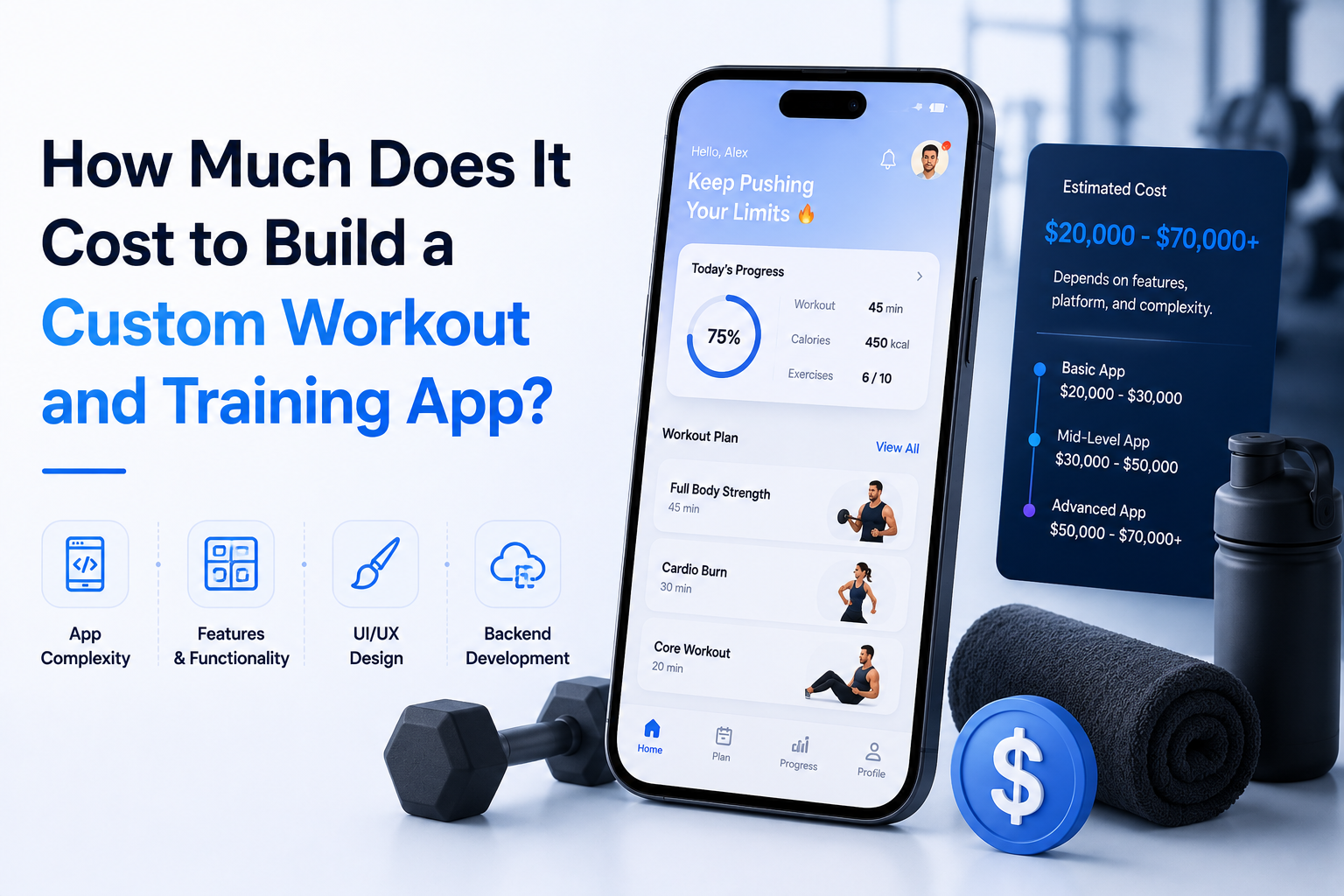
How Much Does It Cost to Build a Custom Workout and Training App?
Fitness has moved way beyond the four walls of a gym. These days, mobile apps are the actual heartbeat of how people train, track their wins, and keep their heads in the game. We aren’t just talking about basic step counters anymore; we’re seeing full-scale digital fitness ecosystems that offer everything from hyper-personalized routines to AI-driven “pocket” coaches.
As everyone starts wanting a piece of this action, startups and brands are teaming up with a fitness app development company to build platforms that actually feel custom to the user. Of course, the million-dollar question—literally, sometimes—is: what’s the actual price tag for a custom workout app?
The truth is, there’s no “menu” price. It’s a mix of features, how much tech “muscle” you need, and the complexity of the design. This guide is a deep dive into real-world pricing and the gritty details that go into a successful launch.
Why Custom Workout Apps Are in High Demand
The fitness world is ditching the old-school for the digital. Today’s users aren’t satisfied with generic PDFs; they’re looking for:
- Routines built specifically for their body type.
- Tracking that happens in real-time.
- 4K video sessions that don’t lag.
- Apps that “talk” to their Apple Watch or Oura ring.
- AI that knows when to push them harder.
Platforms like Nike Training Club haven’t just grown; they’ve set a massive bar for what “good” looks like. For tech startups, that’s a huge opening to build something even better.
Average Cost to Build a Custom Workout App
Building an app is like building a house—it can be a cozy studio or a sprawling mansion. Here is the 2026 breakdown:
| App Type | Estimated Cost |
| Basic Workout App | $15,000 – $50,000 |
| Mid-Level Fitness App | $50,000 – $120,000 |
| Advanced Training Platform | $120,000 – $300,000+ |
| AI-Powered Fitness Ecosystem | $300,000 – $700,000+ |
A “bare-bones” app handles logs and tracking. An “ecosystem” handles live streaming, AI feedback, and every wearable on the market.
Key Factors That Affect Development Cost
1. App Features and Functionality
Features are the biggest budget-eaters.
- The Basics: Standard stuff like user logins, a library of exercises, and simple progress charts. This is the entry-level spend.
- The Advanced Stuff: This is where it gets pricey. We’re talking AI-driven suggestions, live video calls, “social” leaderboards, and gamification elements that keep people hooked. More code equals more hours.
2. UI/UX Design Complexity
If an app is ugly or clunky, users delete it by day two. Fitness apps need to be high-energy and easy to use mid-workout.
- Simple: Basic buttons and lists.
- Premium: Animated charts, interactive timers, and a “journey” that feels personalized. A sleek design keeps people coming back, but it costs more to polish.
3. Platform Choice (iOS, Android, or Both)
Where do your users live?
- One side only: Cheaper, but you’re ignoring half the gym.
- Cross-platform: Using a framework like Flutter lets you write the code once for both iOS and Android. It’s the “smart” way to save money without losing reach.
4. Backend Development and Infrastructure
The “invisible” part of your app is often the most expensive. The backend handles the storage of thousands of workout videos, user history, and cloud syncing. If the backend is weak, the app crashes. Period.
5. Wearable Device Integration
A fitness app that doesn’t talk to a smartwatch in 2026 feels broken. Connecting to Apple Watch, Garmin, or heart rate monitors adds a layer of technical “handshakes” that drive up the cost but make the user experience 10x better.
6. AI and Personalization Features
AI is the new standard. It’s the difference between a static list and a coach that says, “Hey, you’re moving slow today, let’s drop the weight.” Building these “smart” layers takes specialized talent and a bigger investment.
7. Video Content and Streaming
If you’re hosting a video, you’re basically running a mini-Netflix. You need high-end servers (CDNs) so that someone in London and someone in New York can both watch a trainer without the dreaded “buffering” icon.
Cost Breakdown by Development Stage
Planning and Research
This is the “measure twice, cut once” phase. You’re doing market research, wireframing, and writing the technical specs.
- Estimated Cost: $3,000 – $15,000
UI/UX Design
Making it look good and feel right. Prototyping and testing animations happen here.
- Estimated Cost: $5,000 – $40,000
App Development
The main event. This is the bulk of the work—coding the frontend, setting up the servers, and integrating APIs.
- Estimated Cost: $20,000 – $200,000+
Testing and Quality Assurance
Before you launch, you have to try to break it. Testing on different phones, OS versions, and screen sizes is non-negotiable.
- Estimated Cost: $5,000 – $25,000
Launch and Maintenance
Launch isn’t the end. You’ll spend about 15–25% of your original cost every year on server upkeep and bug fixes.
- Estimated Cost: Ongoing.
Mobile App Development Cost vs Fitness App Investment
When you look at the broad mobile app development cost, fitness apps usually sit on the higher end. Why? Because they aren’t static. They require real-time data tracking, heavy video streaming, and complex hardware syncing that a simple “business directory” app just doesn’t need.
Hidden Costs in Fitness App Development
Don’t let these sneak up on you:
- Content: Who is filming the videos? Who is writing the training plans? Content is its own budget.
- Marketing: If you build it, they won’t just come. You need a launch budget.
- Cloud Fees: Storing millions of user progress photos isn’t free.
- The “Next Version”: Users get bored fast. You need a budget to keep the app fresh.
How Long Does It Take to Build a Fitness App?
Time is money. Here is a rough timeline:
- Basic App: 2–4 Months
- Mid-Level: 4–8 Months
- Advanced: 8–14 Months
- AI-Based: 12–18+ Months
Ways to Reduce Development Cost
- Start with an MVP: Build the “Minimum Viable Product.” Just the core features. Launch, learn, then add the bells and whistles later.
- Go Cross-Platform: Use Flutter to hit iOS and Android at once.
- Don’t Over-Engineer: You don’t need 50 features on day one. Pick five that work perfectly.
- Use Ready-Made APIs: Don’t build a payment system or a video player from scratch. Use Stripe or Twilio.
Is a Custom Workout App Profitable?
Absolutely. If it solves a real problem, the money follows. Look at Strava or MyFitnessPal—their subscription models are gold mines. Between premium plans, in-app purchases, and virtual coaching, the revenue streams are solid if the engagement is there.
Future Trends in Fitness App Development
The industry is moving fast. We’re looking at:
- AR/VR Workouts: Training in a digital world.
- Biometric Tracking: Real-time data from smart rings.
- Gamification: Turning the treadmill into a literal video game.
- Social Hubs: Building communities where people actually talk.
Final Thoughts
The final fitness app development cost really comes down to how big you want to go. A simple tracker is a manageable start, but an AI-driven ecosystem is a massive play.
The market is wide open for apps that actually “get” the user. If you plan carefully, focus on the features that matter, and don’t skip the testing phase, you’re looking at a product that can scale globally. Start smart, budget for the long haul, and focus on the person sweating on the other side of the screen.