

Health Education on Hygiene: Building Healthy Habits in Children
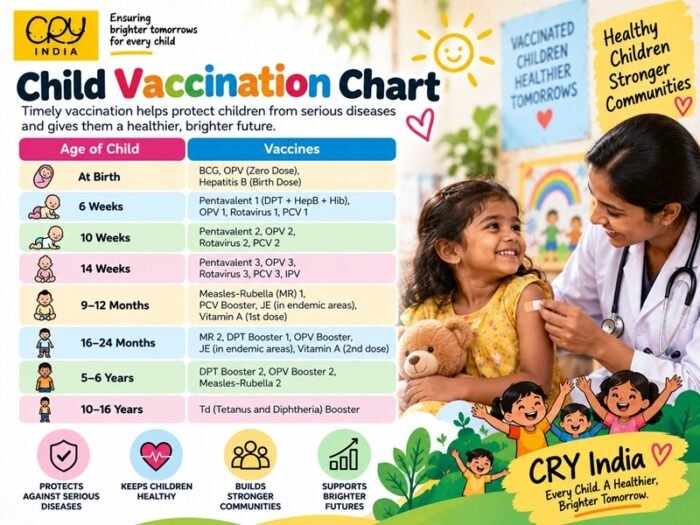
Health education on hygiene teaches children how to maintain personal cleanliness, prevent illnesses, and develop healthy habits from an early age. For children, learning about handwashing, oral care, safe drinking water, and clean surroundings is essential for healthy growth and overall well-being. Organisations like CRY India support children’s rights and work towards creating environments where every child can grow, learn, and live a healthy life.
What Is Health Education on Hygiene?
Health education on hygiene involves teaching children and communities about the importance of cleanliness and healthy daily practices. It helps children understand how germs spread, why personal hygiene matters, and what they can do to protect themselves from common infections.
Hygiene education goes beyond keeping the body clean. It also includes maintaining clean classrooms, using safe sanitation facilities, drinking clean water, and following healthy habits at home and school.
When children receive proper hygiene education, they become more confident in taking responsibility for their health. These habits can also influence their families and communities, helping create a cleaner and healthier environment for everyone.
Why Is Hygiene Education Important for Children?
Children are more likely to adopt healthy habits when they learn about them early in life. Schools, parents, teachers, and community organisations all have an important role in making hygiene education accessible to every child.
1. Helps Prevent Common Diseases
Poor hygiene can increase the risk of illnesses such as diarrhoea, respiratory infections, and certain skin infections. Teaching children to wash their hands with soap, use clean toilets, and avoid sharing personal items can help reduce the spread of germs.
Simple habits, when practised consistently, can make a meaningful difference in children’s health.
2. Improves School Attendance
Frequent illnesses can prevent children from attending school regularly. Hygiene education helps children understand how to protect themselves and others from preventable infections.
When schools provide clean drinking water, functional toilets, and proper handwashing facilities, children can learn in a safer and more comfortable environment.
3. Builds Self-Confidence
Personal cleanliness can help children feel more comfortable in social situations. Habits such as bathing regularly, brushing their teeth, wearing clean clothes, and keeping their nails short support personal well-being.
Teaching these practices positively, without shaming children who lack access to hygiene resources, helps build confidence and encourages healthy behaviour.
4. Develops Lifelong Healthy Habits
Children who learn about hygiene early are more likely to carry these practices into adulthood. Regular handwashing, oral care, safe food handling, and responsible sanitation can become part of their everyday routines.
Parents and teachers can reinforce these habits through demonstrations, reminders, and practical activities.
Essential Hygiene Practices Every Child Should Learn
Health education becomes more effective when children can apply what they learn in their daily lives.
Personal Hygiene
Children should understand the importance of bathing regularly, wearing clean clothes, brushing their teeth twice a day with fluoride toothpaste, and keeping their nails clean and trimmed. They should also learn to cover their mouth and nose when coughing or sneezing and wash their hands afterwards.
As children grow older, age-appropriate education about puberty, menstrual hygiene, and body care becomes equally important.
Handwashing
Handwashing with soap and clean running water is one of the simplest ways to reduce the spread of infections. Children should wash their hands before eating or preparing food, after using the toilet, after playing outside, and whenever their hands are visibly dirty.
Schools can make this learning more engaging by demonstrating the correct technique and providing accessible handwashing stations.
Food and Water Hygiene
Children should learn to drink safe water, eat properly washed fruits and vegetables, and avoid food that may be contaminated. They should also understand why food needs to be stored and handled safely.
Access to clean drinking water is particularly important in schools and communities where water and sanitation facilities may be limited.
Environmental Hygiene
Keeping the environment clean is another important part of health education. Children can participate in age-appropriate activities such as keeping classrooms tidy, using waste bins, and avoiding littering.
Schools should also ensure that toilets are clean, waste is managed safely, and drinking water facilities are maintained properly.
The Role of Schools in Hygiene Education
Schools are important places for teaching and practising healthy behaviours. Teachers can incorporate hygiene lessons into classroom discussions, storytelling, science activities, and school assemblies.
For example, children can participate in handwashing demonstrations, poster-making activities, and discussions about the importance of clean surroundings. These practical methods make hygiene education easier to understand and remember.
However, education alone is not enough. Children also need access to clean toilets, soap, safe drinking water, and suitable sanitation facilities. Without these basic resources, even children who understand hygiene practices may struggle to follow them.
Schools should therefore combine awareness programmes with adequate infrastructure and regular maintenance.
How Parents and Communities Can Support Hygiene Education
Parents can reinforce hygiene lessons by encouraging children to follow simple routines at home. Keeping soap near washing areas, maintaining clean drinking water containers, and making oral care part of the daily routine can help children practise what they learn.
Community participation is equally important. Local organisations, healthcare workers, teachers, and parents can work together to spread awareness about sanitation and disease prevention.
Children should also be encouraged to ask questions and share what they learn with their families. This approach helps turn hygiene education into a shared responsibility rather than a task limited to schools.
How CRY India Supports Children’s Well-Being
CRY India, also known as Child Rights and You, works to advance children’s rights, including their access to education, healthcare, nutrition, protection, and development. These areas are closely connected because children’s ability to learn and thrive depends on their overall well-being.
Health and hygiene awareness can contribute to creating safer environments for children, particularly in communities where access to essential services may be limited. Efforts that promote healthcare awareness, education, sanitation, and community participation can help children develop healthier habits and access the support they need.
Improving children’s well-being requires cooperation among families, schools, communities, public institutions, and organisations working to protect children’s rights.
Conclusion
Health education on hygiene is essential for helping children prevent illnesses, develop self-care skills, and build healthy habits that last a lifetime. From proper handwashing and oral care to safe drinking water and clean school environments, small everyday practices can have a significant impact on children’s well-being.
Parents, teachers, and communities must work together to make hygiene education practical and accessible. Organisations such as CRY India highlight the importance of creating conditions in which children can access essential services, continue their education, and grow in a safe and supportive environment.
When children learn healthy habits and have the resources to practise them, they are better equipped to protect their health and build a healthier future.