
Child Nutrition: Why Proper Nutrition Is Essential for Healthy Growth
Childhood is a critical period of physical and mental development, and nutrition plays a central role in this process. Child nutrition refers to providing children with the food and nutrients they need to grow, learn, stay active, and maintain good health.
A nutritious diet is not only about having enough food. Children need a balanced combination of essential nutrients, safe food, clean water, and appropriate care. When children do not receive adequate nutrition, their growth, learning, immunity, and overall development can be affected.
What Is Child Nutrition?
Child nutrition is the study and practice of providing children with adequate nutrients to support healthy growth and development.
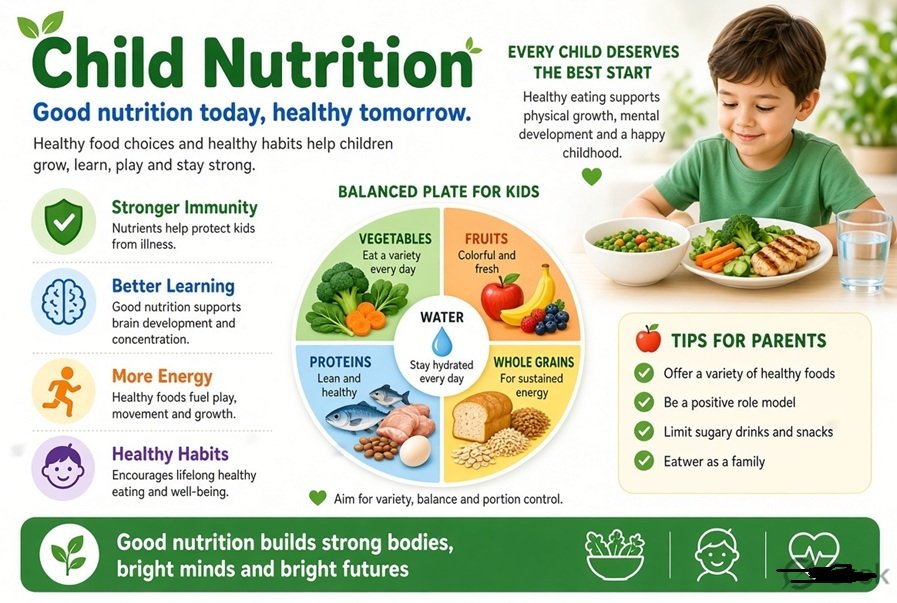
Children need a variety of nutrients, including proteins, carbohydrates, healthy fats, vitamins, minerals, and water. The amount and type of food needed can vary depending on a child’s age, growth stage, activity level, and individual circumstances.
Good nutrition begins early in life and continues throughout childhood and adolescence.
Why Is Child Nutrition Important?
Proper nutrition provides children with energy and nutrients needed for physical growth, brain development, immune function, and everyday activities.
Children who receive adequate nutrition are better positioned to grow and develop normally. Nutrition is also closely connected with education because children need energy, concentration, and good health to participate effectively in school.
Poor nutrition can create a cycle in which illness and inadequate food intake affect development, while poverty and limited access to nutritious foods make it harder to improve the situation.
Essential Nutrients for Children
Children need several categories of nutrients to support their development.
Protein helps support growth and the development and repair of body tissues. Sources can include pulses, beans, dairy products, eggs, fish, meat, nuts, and seeds, depending on dietary preferences and availability.
Carbohydrates provide energy for daily activities. Whole grains, fruits, vegetables, and other nutrient-rich sources can form part of a balanced diet.
Healthy fats support growth and provide energy. Nuts, seeds, dairy products, and certain oils can provide dietary fats.
Vitamins and minerals perform many functions in the body. Fruits, vegetables, whole grains, legumes, dairy products, and other nutrient-rich foods can contribute to adequate intake.
Water is also essential because hydration supports many normal bodily functions.
Child Nutrition and Brain Development
Nutrition is closely connected with children’s cognitive and physical development.
Children need adequate nutrients during periods of rapid growth. A balanced diet can support normal brain development and provide the energy needed for learning and concentration.
Nutrition should therefore be considered an important part of education and child development rather than a separate issue.
Nutrition and Immunity
Adequate nutrition supports the body’s normal immune functions.
Children who do not receive sufficient nutrients may be more vulnerable to health problems. Illness can also affect appetite and nutrient intake, creating a difficult cycle.
This is why nutrition programmes often need to work alongside healthcare, hygiene, sanitation, and other child-welfare measures.
Malnutrition in Children
Malnutrition occurs when there is an imbalance in nutrition. It can involve undernutrition, micronutrient deficiencies, or overweight and obesity.
Undernutrition can affect children’s growth and development. Micronutrient deficiencies can occur when children do not receive adequate amounts of essential vitamins and minerals.
At the same time, unhealthy diets can contribute to overweight and obesity.
Addressing child nutrition therefore requires attention to both nutritional adequacy and diet quality.
Poverty and Child Nutrition
Economic circumstances can strongly influence children’s access to nutritious food.
Families experiencing financial hardship may find it difficult to regularly purchase diverse and nutrient-rich foods. Food insecurity can also lead to diets that provide enough calories but lack important nutrients.
This demonstrates why child nutrition cannot be addressed only by telling families what children should eat. Access to affordable, safe, nutritious food is also important.
Child Nutrition and Education
Nutrition and education are closely connected.
Children who are hungry or unwell may find it difficult to concentrate, participate in classroom activities, or attend school regularly.
School-based nutrition initiatives can therefore have benefits beyond food provision. When children have access to appropriate nutrition and a supportive school environment, they may be better able to participate in learning.
The Importance of Maternal and Infant Nutrition
Nutrition before and during pregnancy and during infancy can influence early childhood development.
Infants have specific nutritional needs, and feeding practices should be appropriate for their age and developmental stage. Breastfeeding can provide important nutrients and immune-related benefits during infancy, while complementary foods become important as children grow.
Parents and caregivers should seek guidance from qualified healthcare professionals for individual feeding concerns, particularly when a child has growth or health issues.
Clean Water, Sanitation and Nutrition
Nutrition cannot be separated from water, sanitation, and hygiene.
Unsafe water and poor sanitation can increase exposure to infections, which may affect children’s health and nutritional status. Good hygiene practices and access to safe water can therefore complement nutrition interventions.
This connection is one reason child health programmes often consider nutrition together with WASH—water, sanitation, and hygiene.
Child Nutrition and Community Support
Families play a central role in children’s nutrition, but communities and public systems also matter.
Schools, healthcare providers, community organisations, government programmes, and NGOs can help families access information and services related to nutrition and child health.
For disadvantaged communities, community-level support can be particularly valuable when families face barriers related to income, healthcare access, food availability, or sanitation.
The Role of CRY in Child Health and Nutrition
Child Rights and You (CRY) works toward protecting children’s rights and creating conditions where children can experience happier childhoods. Health and nutrition are among the areas covered by its child-rights work, alongside education, safety and protection, and child participation.
A child-rights approach to nutrition recognises that children need more than food alone. They also need healthcare, safe environments, education, protection, and supportive communities.
How Parents Can Support Child Nutrition
Parents and caregivers can support children’s nutrition by offering a varied and balanced diet that includes nutrient-rich foods appropriate for the child’s age.
Meals can include a combination of vegetables, fruits, whole grains, pulses or other protein sources, and suitable dairy or alternatives, depending on dietary needs and cultural preferences.
Children should also be encouraged to drink safe water and develop healthy eating habits.
Food should not be used as a reward or punishment, and children should be given appropriate opportunities to develop a positive relationship with eating.
How Schools Can Support Child Nutrition
Schools can contribute by creating healthy food environments and providing age-appropriate nutrition education.
Where school meal programmes are available, they can provide an important source of nutrition for children, particularly those who may face food insecurity.
Schools can also promote clean drinking water, good hygiene, physical activity, and awareness about healthy food choices.
Frequently Asked Questions About Child Nutrition
What is child nutrition?
Child nutrition refers to providing children with the food, nutrients, water, and dietary support needed for healthy growth, development, physical activity, and overall well-being.
Why is nutrition important for children?
Nutrition provides children with energy and essential nutrients needed for growth, brain development, immune function, and everyday activities. Good nutrition can also support children’s ability to participate in education.
What nutrients do children need?
Children need proteins, carbohydrates, healthy fats, vitamins, minerals, and water. The specific nutritional requirements vary according to age, growth, activity level, and individual health needs.
How does poverty affect child nutrition?
Poverty can make it difficult for families to consistently access diverse and nutritious foods. Food insecurity can increase the risk of inadequate nutrition and related health problems.
How does nutrition affect education?
Hunger and poor nutrition can affect children’s energy, concentration, health, and school participation. Adequate nutrition can support children’s ability to engage in learning and daily activities.
How can parents improve child nutrition?
Parents can offer children a varied and balanced diet, provide safe drinking water, encourage healthy eating habits, and seek professional guidance when they have concerns about a child’s growth, feeding, or nutritional needs.
Conclusion
Child nutrition is an essential part of healthy growth and development. Children need adequate and diverse nutrition to support their physical development, brain function, immunity, energy, and ability to participate in everyday life.
However, improving child nutrition requires more than focusing on individual food choices. Poverty, food insecurity, healthcare access, sanitation, clean water, education, and community conditions can all influence a child’s nutritional well-being.
Families, schools, healthcare systems, governments, communities, and child-rights organisations all have roles to play. Organisations such as CRY – Child Rights and You work across areas including health and nutrition, education, safety and protection, and child participation as part of a broader child-rights approach.
When children have access to nutritious food, healthcare, safe environments, education, and supportive communities, they have a stronger foundation for healthy growth and a happier childhood.