

How Data-Driven Kitchens Are Replacing Clipboard Logs
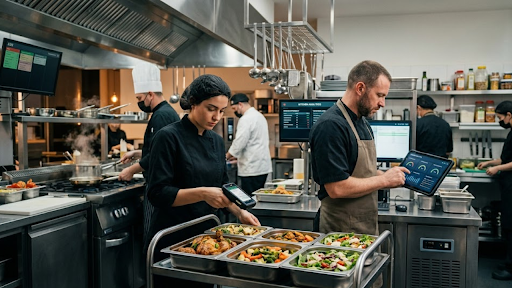
Commercial kitchens generate massive amounts of operational data every day. From production quantities and portion sizes to leftovers and food safety checks, kitchens constantly make decisions that directly impact food costs, efficiency, and waste.
Yet many foodservice operations still rely on manual tracking methods like clipboards, spreadsheets, and handwritten logs.
For years, these systems were considered standard practice. Today, they are becoming one of the biggest barriers to operational efficiency, especially as food waste continues to put pressure on restaurant profitability. In the United States alone, the restaurant industry is estimated to waste nearly 11.4 million tons of food every year, highlighting how costly inefficient kitchen processes can become.
As kitchens become more complex and food costs continue to rise, operators are turning to kitchen intelligence software to replace outdated manual processes with real-time, data-driven decision-making.
The Problem With Clipboard-Based Tracking
Clipboard logs were built for a different era of foodservice.
In modern commercial kitchens, teams move quickly, production volumes are high, and operational demands constantly change throughout the day. Manual tracking systems struggle to keep up with that pace.
During busy service periods, staff rarely have time to accurately record:
- Prep quantities
- Portion sizes
- Leftover volumes
- Temperature checks
- Waste categories
Even when tracking happens, the data is often incomplete or inconsistent between shifts.
The result is limited visibility into what is actually happening inside the kitchen.
Managers may know food waste exists, but they often cannot answer critical questions such as:
- Which menu items are consistently overproduced?
- How much food is discarded daily?
- Which stations create the most waste?
- How accurate are current production forecasts?
- Where are food costs increasing unnecessarily?
Without reliable operational data, kitchens are forced to make decisions based on estimates rather than measurable trends.
Why Data Accuracy Matters in Commercial Kitchens
Small operational inefficiencies can create major financial losses over time.
For example:
- Slightly oversized portions increase ingredient usage
- Overprepping during slower meal periods creates unnecessary waste
- Inaccurate forecasting leads to excess inventory
- Missed temperature checks can result in food disposal
These issues often happen quietly across multiple shifts and stations.
When kitchens rely on manual logs, identifying patterns becomes extremely difficult. Data may be delayed, incomplete, or never recorded at all.
Data-driven kitchens solve this problem by automatically capturing operational information in real time.
How Kitchen Intelligence Software Works
This software replaces manual tracking with automated food data collection.
Platforms like Metafoodx use AI-powered scanning systems to track food throughout the production and service cycle.
Before Service
Prepared pans or dishes are placed on a scanner for a few seconds. The system automatically records:
- Menu item identification
- Food weight
- Portion quantities
- Temperature data
There is no need for manual entry or handwritten logs.
After Service
Returning trays are scanned again to capture:
- Remaining food quantities
- Waste levels
- Reuse opportunities
- Donation and compost tracking
This creates a complete operational picture of what was produced, consumed, and discarded during service.
Because the process is automated, kitchens can collect accurate data without disrupting workflow.
How Data-Driven Kitchens Reduce Food Waste
One of the biggest benefits of this software is waste reduction.
Mst kitchens overprepare food because running out during service feels risky. However, consistent overproduction leads to significant long-term waste and higher food costs.
With accurate production data, kitchens can identify:
- Which menu items consistently return with leftovers
- Which stations overproduce during slower shifts
- Which meals have predictable demand patterns
- Which foods regularly expire before use
This allows operators to make more precise production decisions.
Instead of relying on assumptions, kitchens can forecast based on actual consumption trends.
Over time, this leads to:
- Lower food costs
- Reduced overproduction
- Better inventory management
- Improved operational efficiency
- Why Automation Improves Staff Adoption
One reason clipboard systems persist is because kitchen teams are already busy. Any system that feels complicated or time-consuming is unlikely to succeed long term.
That is why automation matters.
Modern software is designed to fit naturally into existing workflows rather than adding more administrative work.
Features like:
- Automatic food recognition
- Real-time tracking
- Quick scanning processes
- Minimal manual input
help kitchens maintain accurate reporting without slowing down operations.
The easier the system is to use, the more consistently teams will use it.
Better Data Leads to Better Planning
Data-driven kitchens are not just reducing waste. They are improving planning accuracy across the entire operation.
With historical production and consumption data, managers can:
- Forecast demand more accurately
- Improve purchasing decisions
- Reduce unnecessary inventory
- Adjust prep quantities more effectively
- Improve consistency between shifts
Over time, kitchens become more proactive instead of reactive.
Rather than reviewing waste after it happens, teams can prevent inefficiencies before they occur.
The Shift Away From Manual Kitchen Management
Commercial kitchens are becoming more data-driven because operational complexity continues to increase.
Food costs are rising. Sustainability expectations are growing. Labor shortages continue to affect the industry. At the same time, operators are expected to improve efficiency without sacrificing food quality or customer experience.
Clipboard logs no longer provide the visibility required to manage these challenges effectively.
This software gives operators real-time insight into production, waste, food safety, and consumption patterns that manual systems simply cannot match.
Conclusion
The shift from clipboard logs to data-driven kitchen operations is not just about technology. It is about visibility, accuracy, and operational control.
Kitchen intelligence software helps commercial kitchens:
- Reduce food waste
- Improve forecasting
- Lower operational costs
- Simplify reporting
- Improve food safety tracking
- Support sustainability goals
Most importantly, it allows kitchens to make decisions based on real operational data rather than assumptions.
As foodservice operations continue evolving, data-driven kitchens are quickly becoming the new standard for efficient and sustainable commercial food production.