


What is estimating software for construction in project cost systems?
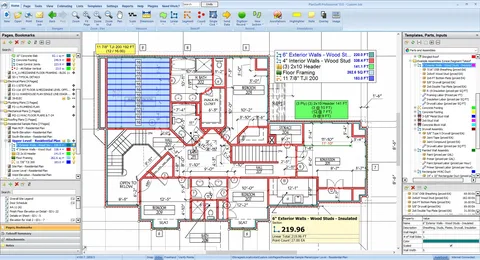
Estimating the construction cost is an important aspect of project planning and cost control. The conventional estimation techniques usually refer to manual computations, which pose the threat of inaccuracies and budget overruns. These problems impact the project schedules and diminish financial predictability. With the growing complexity of construction projects, it is necessary to have a structured estimation system in order to ensure consistency and cost visibility.
Estimating software for construction brings a methodical system to handling cost data of the project. It integrates the amount calculations, pricing systems, and financial planning in a single system. This will provide uniformity in the flow of data and minimize estimation differences. Consequently, the contemporary construction processes are based on digital estimation systems to ensure accuracy and control in the project cost processes.
Familiarity with Construction Cost Estimation Systems
The purpose of cost estimation in construction projects
The financial basis of any construction project is cost estimation. Proper forecasting will make sure that the budgets comply with project needs. Estimation data are used by the teams in resource, time, and financial planning. This estimation-planning relationship makes sure that the projects are organized at the start.
Change to Digital Systems
The nature of construction environments has changed to organized digital platforms as opposed to spreadsheets. Hand calculations tend to produce discrepancies caused by human error. By comparison, construction cost estimation tools offer a steady framework of dealing with cost data. This change is in line with construction budgeting software, which is concerned with systematic financial planning.
Basic Operations of construction estimating software
Quantity Takeoff and Material Calculation
The estimation of the costs is based on quantity takeoff. Teams quantify materials and stipulate the project quantities. Estimating software for construction is a connection between such calculations and cost databases, which guarantees that the price is accurate. The process eliminates human error related to manual estimates and ensures that the estimation outcomes are consistent.
Information on Costs and Pricing Structures
Cost databases are databases that have fixed prices of materials, labor, and equipment. These values are updated according to the market conditions by teams. Formal pricing will provide uniformity in projects. The approach enables estimators to base estimation on valid data as opposed to assumptions.
Preparation of Bids and Proposals
Estimating systems arrange project information in systematized bids. Teams come up with proposals that are founded on correct cost calculations. Standardized formats can be used to provide uniformity in various projects. This design enhances transparency in the bidding process.
The integration of estimating software in project cost systems
Data input and model of cost
Project specifications are keyed in estimation systems by teams to come up with cost models. These models take into account factors like materials, labor, and timelines. This data is fed into the system to generate organized cost estimates. This will provide uniformity in budgeting.
Connection between Estimation and Budget Planning
Project budgets are linked with estimation systems. Teams match the financial constraints and variances with estimated costs. This relationship makes sure that projects are within the budget. It also gives an insight into financial performance over the project lifecycle.
Co-ordination with Financial and Project Systems
The estimation systems used today are combined with accounting and ERP systems. Such a combination facilitates the flow of data between financial and operational systems. The construction of cost estimation software is based on such coordination to ensure accuracy and minimization of data duplication.
The use of estimating software in construction cost control
Reducing Cost Variability
Regularized estimation techniques lessen differences in cost estimates. The teams are subject to uniform processes, thus yielding predictable financial results. Estimating software for construction is at the heart of the stability of costs in project management.
Ensuring Greater Accuracy in Project Forecasting
Data-driven systems are computed costs that are computed using structured inputs. This minimizes the use of assumptions and enhances the accuracy of forecasts. Better control is achieved over financial planning and project outcomes by the teams.
Assisting in decision-making during the budget allocation
The estimation systems give insights that can be used in making financial decisions. Teams consider the cost scenarios and budget appropriately. This is a systematic way of making sure that there is transparency in the financial planning and allocation of resources.
Some of the typical constraints of traditional cost estimation
Manual Calculation Errors
Cost calculation can be inaccurate in situations where manual data entry is used. Inaccurate calculations in quantities and prices pose financial risks. Such mistakes concern the performance of the project as a whole.
Inavailability of Standardized Cost Data
Conventional systems do not have standard pricing points. The difference in cost data causes inconsistencies in the project. This problem decreases the reliability in estimation results.
Poor Visibility in Cost Tracking
Manual systems offer minimal insights into changes in costs. The teams find it difficult to follow changes in real time. This invisibility influences the decision-making and financial control.
The way that Estimating Software in Construction can solve these problem
Automated Cost Calculations
Quantities and prices are computed by automated systems using structured data. This will eliminate manual entry and error reduction. Constant outputs are important to teams to be estimated correctly. Applications such as Constil indicate the extent to which digital systems have been organized to be employed within the contemporary construction estimation settings to control the accuracy of costs and consistency of the workflow.
Single Cost Data Management
Cost data are stored in single libraries of centralized systems. This brings uniformity to all projects and also provides sound pricing systems. This structure underlies construction estimating solutions in order to be accurate.
Real-Time Cost Monitoring
The contemporary systems monitor the changes in costs. Teams are able to see financial changes and project performance. This monitoring in real-time enhances control of project budgets.
Major Functionalities of the Current-Day Construction Estimation Solutions
Cost Breakdown and Reporting
The systems of estimation give a cost breakdown of every component of the project. Reports produced by teams are financial in nature. Such reports enhance transparency to the stakeholders.
Cost Comparison and Scenario Analysis
Various cost scenarios are analyzed by teams on the basis of organized data. This gives an ability to compare project options and financial plans. It also aids better decision-making of planning.
Documentation and Audit Trails
Records of all the changes in estimation are maintained by systems. This brings about transparency and accountability of the cost calculations. Information is available in the form of historical data that teams can use in the future.
When Construction is used by Businesses using Estimating Software
Raising the scale and complexity of Projects
Big projects have numerous variables of costs and stakeholders. These factors need to be dealt with through well-organized estimation systems. In dealing with such complexity, estimating software to be used in construction becomes necessary.
Frequent Budget Deviations
Reoccurring overruns in costs are signs of errors in the estimation. Structured systems are the ones used by businesses in order to maintain financial control. This change assures uniformity in budgeting and forecasting.
Considerations in implementation in cost estimation systems
Connection to Existing Systems
Organizations need to make sure that they are compatible with accounting tools and project systems. Information is synchronized to maintain information consistency. This integration ensures that there is accuracy in financial processes.
Accuracy of data and Quality of input
The quality of estimation results depends on the accuracy of input data. The teams should have dependable sources of data to be consistent. Data quality impacts financial planning and project performance.
Future Trends in Construction Cost Estimation System
Data-Driven Estimation Models
The systems of the future are based on the prediction of costs using analytics and past data. Such models give systematic information about the project costs. This data is used by teams to be consistent in estimation processes.
Digital Construction Ecosystems integration
Estimation systems are still combined with the project management systems. This forms interlinked spaces of construction data management. These systems correspond to contemporary building processes and ecosystems.
Conclusion
Effective cost estimation determines the financial stability of the construction projects and proper planning throughout all the stages. Manual means can bring about variability and restrict the ability to see cost performance. Estimating software for construction creates a systematic framework that balances information, prices, and budgeting in a single system. Such a method enhances accuracy and financial management and encourages predictable performance in contemporary construction settings where accuracy and consistency are highly valued.
FAQs
What does estimating construction software do?
It is applicable in determining the project costs, the quantities of materials, and budget estimates in construction projects. It offers systematic information to make precise financial planning and project forecasting.
Why is estimating software in construction better?
It also minimizes the error in calculation done manually through automation in the cost estimation processes. The estimating software for construction provides consistent and reliable cost information on projects.
What is the purpose of estimating software by construction companies?
It is used to operate budgets, prepare bids, and control costs on the project by companies. It assists in ensuring that there is financial discipline at various stages of construction.
What information is needed in the construction estimating systems?
It needs the specifications of the project, the amount of materials, and the updated cost databases. The input data should be accurate so that the estimation is accurate and the project results are improved.