

Child Vaccination Chart: Complete Immunization Schedule in India
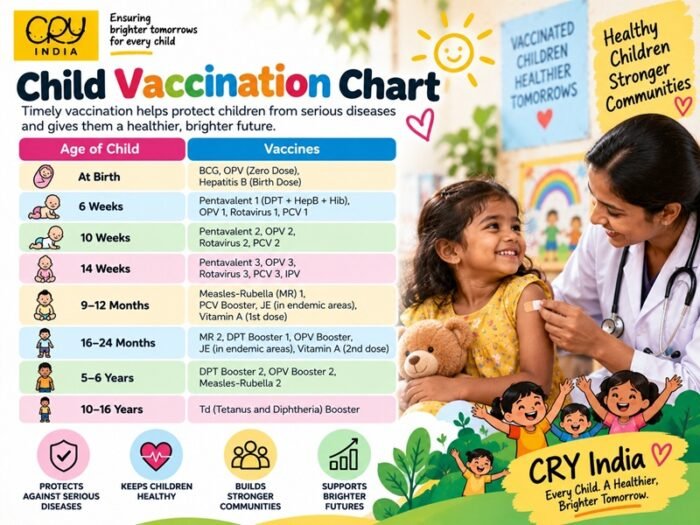
A child vaccination chart helps parents understand which vaccines are recommended at different ages. In India, the National Immunization Schedule includes vaccines from birth through childhood and adolescence to protect children against several serious and potentially preventable diseases.
Vaccination is one of the most important parts of childhood healthcare. Keeping your child’s vaccination record updated can help ensure that recommended doses are received at the appropriate age.
What Is a Child Vaccination Chart?
A child vaccination chart is an age-wise schedule that lists vaccines recommended for children, when they should be given, and, in some cases, the number of doses required.
The schedule can vary depending on the country’s national immunization program, the child’s medical history, local disease risks, and recommendations from a healthcare professional.
In India, the Universal Immunization Programme (UIP) provides vaccines according to the National Immunization Schedule. Government health facilities follow this schedule for routine childhood immunization.
Child Vaccination Chart in India
The following table summarizes the major childhood vaccines included in India’s National Immunization Schedule.
| Child’s Age | Vaccines |
|---|---|
| At birth | BCG, Hepatitis B birth dose, OPV-0 |
| 6 weeks | OPV-1, Pentavalent-1, Rotavirus-1, fIPV-1, PCV-1 |
| 10 weeks | OPV-2, Pentavalent-2, Rotavirus-2 |
| 14 weeks | OPV-3, Pentavalent-3, fIPV-2, Rotavirus-3, PCV-2 |
| 9–12 months | MR-1, JE-1 where applicable, PCV booster |
| 16–24 months | MR-2, JE-2 where applicable, DPT booster-1, OPV booster |
| 5–6 years | DPT booster-2 |
| 10 years | Td |
| 16 years | Td |
The National Immunization Schedule also specifies that Japanese Encephalitis vaccination is provided where applicable, particularly in endemic areas.
Vaccines Given at Birth
The first vaccines are generally given around the time of birth.
BCG Vaccine
BCG, or Bacillus Calmette-Guérin vaccine, is given to help protect against tuberculosis, particularly severe forms of childhood tuberculosis.
Hepatitis B Birth Dose
The hepatitis B birth dose helps protect newborns against hepatitis B infection. The national schedule recommends giving the birth dose as early as possible after birth.
OPV-0
The zero dose of the Oral Polio Vaccine (OPV) is given at birth or as early as possible within the first 15 days according to the National Immunization Schedule.
Vaccination at 6 Weeks
Around six weeks of age, several important vaccines are scheduled.
These include:
OPV-1: First oral polio vaccine dose.
Pentavalent-1: Protects against five infections through one combination vaccine.
Rotavirus-1: Helps protect against rotavirus disease.
fIPV-1: First fractional dose of inactivated polio vaccine.
PCV-1: First pneumococcal conjugate vaccine dose.
The exact availability and implementation of some vaccines can vary according to the applicable government immunization program and location.
Vaccination at 10 Weeks
At approximately 10 weeks, the schedule includes:
- OPV-2
- Pentavalent-2
- Rotavirus-2
Following the recommended timing helps maintain the primary vaccination series.
Vaccination at 14 Weeks
At 14 weeks, children are scheduled to receive:
- OPV-3
- Pentavalent-3
- Rotavirus-3
- fIPV-2
- PCV-2
These vaccines form an important part of the infant immunization schedule.
Vaccines at 9 to 12 Months
Between 9 and 12 months, the vaccination schedule includes:
MR-1: First dose of measles-rubella vaccine.
JE-1: Japanese Encephalitis vaccine where applicable.
PCV booster: Booster dose of pneumococcal conjugate vaccine.
The JE vaccine is used in areas where it is part of the applicable immunization program.
Vaccines at 16 to 24 Months
Between 16 and 24 months, children receive several booster doses.
These include:
- MR-2
- JE-2 where applicable
- DPT booster-1
- OPV booster
Boosters help maintain protection after the primary vaccination series.
Vaccination at 5 to 6 Years
The National Immunization Schedule includes a second DPT booster at approximately 5–6 years of age.
DPT refers to protection against:
- Diphtheria
- Pertussis
- Tetanus
Vaccination at 10 and 16 Years
Vaccination continues beyond early childhood.
The current National Immunization Schedule lists Td vaccination at 10 years and again at 16 years. Td protects against tetanus and diphtheria.
This is important because immunization is not limited to infancy and the toddler years.
Why Is Childhood Vaccination Important?
Vaccines train the immune system to recognize specific infections and develop protection against them.
Childhood vaccination can help reduce the risk of serious diseases and also contributes to community-level protection when high vaccination coverage is achieved.
Vaccination programs are particularly important for children because their immune systems are still developing and some vaccine-preventable infections can cause serious complications.
What Diseases Do Childhood Vaccines Help Prevent?
Depending on the vaccine and immunization program, childhood vaccines can provide protection against diseases including:
- Tuberculosis
- Hepatitis B
- Polio
- Diphtheria
- Pertussis
- Tetanus
- Haemophilus influenzae type b disease
- Rotavirus disease
- Pneumococcal disease
- Measles
- Rubella
- Japanese Encephalitis in applicable areas
The National Immunization Schedule defines which vaccines are provided through India’s government immunization program and at what ages.
What If a Child Misses a Vaccine?
Parents should not assume that a missed vaccination means the entire vaccination schedule has to be restarted.
If a child misses a scheduled dose, parents should contact a pediatrician or vaccination center and provide the child’s existing vaccination record. A healthcare professional can determine which doses are due and how to continue the schedule.
Keeping the vaccination card available is especially useful when the child receives vaccines at different healthcare facilities.
How Can Parents Keep Track of Vaccinations?
A simple vaccination record can make it easier to track completed and upcoming doses.
Parents should:
Keep the child’s vaccination card safely.
Record the date of every vaccine.
Ask the healthcare provider about the next scheduled dose.
Carry the vaccination record during medical visits.
Inform the doctor about previous vaccines before receiving additional doses.
India has also introduced the U-WIN platform to digitally record vaccination information under the Universal Immunization Programme. Government facilities such as Dr. Ram Manohar Lohia Hospital report using U-WIN for children receiving vaccinations.
Are All Children Given Exactly the Same Vaccines?
Not necessarily.
The National Immunization Schedule provides the government-supported routine immunization framework, but a child’s individual vaccination plan can differ based on medical history, previous vaccinations, location, disease exposure, travel, and recommendations from the pediatrician.
Some vaccines may also be recommended through private healthcare providers beyond the government schedule.
For this reason, parents should use the national schedule as a reference rather than replacing individualized medical advice.
Government Vaccination vs Private Vaccination
India’s Universal Immunization Programme provides routine vaccination through government health services.
Private pediatricians may recommend additional vaccines depending on the child’s age, health status, risk factors, and professional guidelines.
The two schedules should not be assumed to be identical.
If your child receives vaccines through both government and private facilities, maintain a single, updated vaccination record to avoid confusion.
Practical Tip: Before every vaccination visit, take your child’s vaccination card with you. Ask the healthcare provider to confirm which doses have already been administered and which ones are due next.
Child Vaccination Chart for Parents
A simple way to remember the major milestones is:
Birth: BCG, Hepatitis B, OPV-0
6 weeks: OPV, Pentavalent, Rotavirus, fIPV, PCV
10 weeks: OPV, Pentavalent, Rotavirus
14 weeks: OPV, Pentavalent, Rotavirus, fIPV, PCV
9–12 months: MR, PCV booster, JE where applicable
16–24 months: MR, DPT booster, OPV booster, JE where applicable
5–6 years: DPT booster
10 years: Td
16 years: Td
Child Vaccination and Child Health
Vaccination is only one part of a child’s overall health and development.
Children also need adequate nutrition, clean water and sanitation, regular healthcare, a safe environment, education, and protection from violence and exploitation.
Organizations working for children’s rights also focus on these broader determinants of childhood well-being.
CRY India works to promote children’s rights and supports initiatives related to education, health, nutrition, protection, and participation. Improving access to essential healthcare and ensuring that children receive appropriate support are important parts of creating healthier childhoods.
Frequently Asked Questions
What is the child vaccination chart in India?
The child vaccination chart in India outlines vaccines recommended at different ages under the National Immunization Schedule, beginning at birth and continuing through adolescence.
Which vaccine is given first to a newborn?
Under India’s National Immunization Schedule, BCG, the hepatitis B birth dose, and OPV-0 are scheduled around birth.
What vaccines are given at 6 weeks?
The schedule includes OPV-1, Pentavalent-1, Rotavirus-1, fIPV-1, and PCV-1 at 6 weeks.
Which vaccines are given at 9 months?
The National Immunization Schedule lists the first MR dose between 9 and 12 months, along with a PCV booster and JE vaccination where applicable.
Are vaccinations necessary after one year?
Yes. The national schedule continues with booster and additional doses after the first year, including vaccinations at 16–24 months, 5–6 years, 10 years, and 16 years.
What should I do if my child missed a vaccine?
Contact a pediatrician or vaccination center with the child’s vaccination record. The healthcare professional can determine the appropriate catch-up schedule.
Where can parents get childhood vaccinations?
Vaccinations included under India’s government immunization program are provided through designated public health facilities. Private pediatric clinics may also provide routine and additional vaccines.
Final Thoughts
A child vaccination chart gives parents a useful age-wise overview of routine immunization in India. From vaccines given at birth to booster doses during childhood and adolescence, following the recommended schedule helps children receive timely protection against several serious infectious diseases.
Parents should keep the vaccination record updated and consult a qualified healthcare professional if a dose is missed, delayed, or if they are unsure about their child’s vaccination status.
The National Immunization Schedule can change as public-health recommendations and government programs evolve, so parents should verify the current schedule with an authorized healthcare provider or government health facility rather than relying solely on an older online chart.