

How an E-Invoice System Helps Businesses Stay GST Compliant
The Goods and Services Tax (GST) regime in India has evolved significantly over the years. What started as a return-filing tax system has transformed into a technology-driven compliance ecosystem powered by real-time data validation, invoice matching, and automated scrutiny. At the heart of this transformation lies e invoice system — a system that has become indispensable for businesses seeking to stay GST compliant.
If your business has an aggregate annual turnover exceeding ₹5 crore, e-invoicing is not optional — it is mandatory. And the right e-invoicing system, such as BUSY Accounting Software, can make the difference between seamless compliance and costly penalties.
Let us explore how an e-invoice system helps businesses stay GST compliant — and why BUSY is the trusted choice for over 6,00,000 businesses across India.
What Is E-Invoicing Under GST?
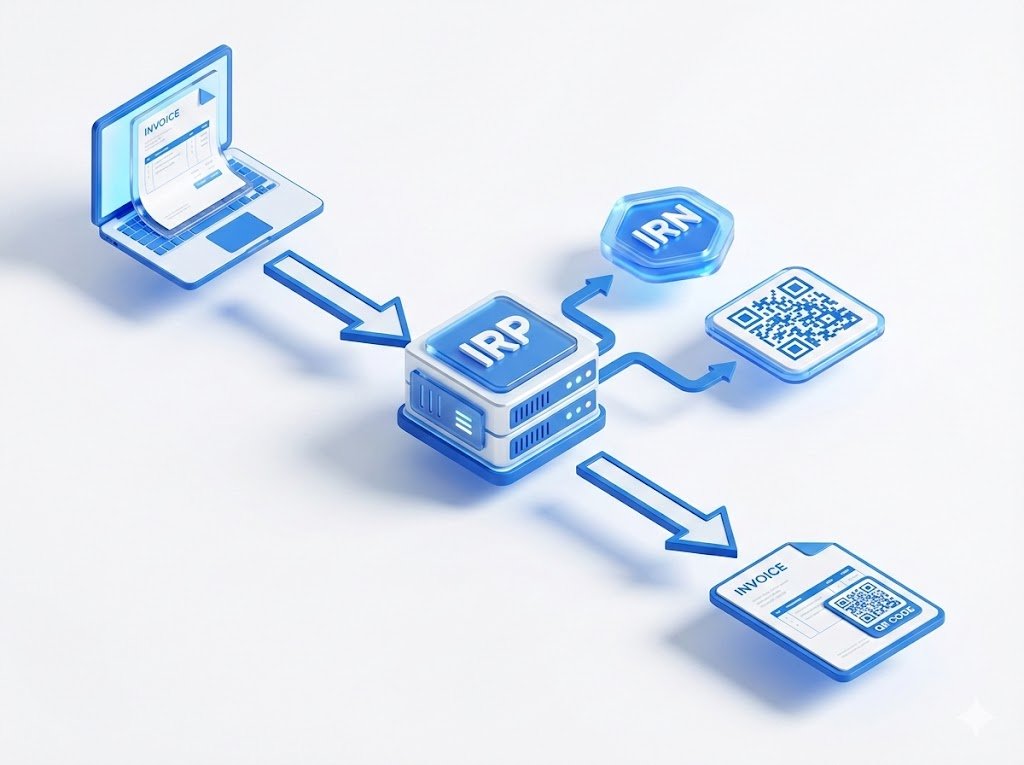
An e-invoice under GST is not merely a PDF invoice sent via email or WhatsApp. It is a tax invoice created in a prescribed digital format and reported to the Invoice Registration Portal (IRP) for validation and authentication.
Once the invoice data is uploaded, the IRP verifies the details, generates a unique Invoice Reference Number (IRN), digitally signs the invoice, and attaches a QR code. Only after this authentication does the invoice become legally valid under GST.
The e-invoicing system standardises B2B invoice reporting, reduces duplicate data entry, improves GST compliance, and creates a stronger audit trail.
Who Must Comply with E-Invoicing?
E-invoicing is mandatory for registered taxpayers whose PAN-level aggregate annual turnover exceeds ₹5 crore. This threshold is checked at the PAN level, not GSTIN by GSTIN.
From April 1, 2026, businesses meeting this threshold must implement mandatory e-invoicing for all B2B supplies of goods or services. The mandate applies to B2B transactions, exports, and credit or debit notes related to such supplies. Certain sectors — such as insurers, banks, NBFCs, and passenger transport service providers — are exempt.
How an E-Invoice System Ensures GST Compliance
1. Automated Invoice Generation with IRN and QR Code
A robust e-invoice system automates the entire invoicing process. Instead of manually uploading invoices to the GST portal, the system prepares invoice data in the required schema, sends it to the IRP, and receives the authenticated output with IRN and QR code.
BUSY takes this a step further by offering auto e-invoice creation with IRP integration — IRN and QR codes are printed automatically on bills. This eliminates manual errors and ensures every invoice is GST-compliant from the moment it is generated.
2. Real-Time Data Validation
One of the biggest compliance risks is incorrect or incomplete invoice data. An effective e-invoice system validates data in real-time during entry, identifying issues before invoices are finalised.
Key validations include:
-
GSTIN format checks
-
Mandatory field verification
-
Tax type validation (IGST vs CGST and SGST)
-
Duplicate invoice number alerts
-
Item-wise tax checks
These validations reduce errors and help maintain reliable invoice data for GST reporting. With BUSY, businesses can generate error-free e-invoices automatically, without even visiting the GST portal.
3. Seamless Integration with GST Portal and IRP
A compliant e-invoice system integrates directly with the GST portal and IRP workflows. The software prepares invoice data in the required format and helps process it through the system to obtain valid e-invoice details.
BUSY provides direct, built-in integration for generating both e-invoices and e-way bills. It supports:
-
GST portal login integration
-
E-way bill and e-invoice reports
-
Download of all GST returns from a single window
-
GST reconciliation and filing
4. Auto-Population of GST Returns
E-invoice data is used to auto-populate relevant parts of GSTR-1. This means the same invoice data that flows through the e-invoicing system automatically becomes available for return filing — eliminating the need for multiple data entries.
The system also supports e-way bill generation when transport details are available. With BUSY, businesses can generate e-way bills along with invoices, reducing portal work and repeated entry.
5. Input Tax Credit (ITC) Protection
Non-compliant e-invoicing can have serious consequences for ITC claims. If an invoice is not registered on the IRP, it is considered invalid, and the counterparty cannot claim ITC on such invoices.
An e-invoice system ensures that every invoice is properly authenticated, protecting both the seller’s and buyer’s ITC claims. BUSY helps with GSTR reconciliation in 1-click for GSTR-1/2A/2B/3B, with ITC mismatch tracking and error-free filing.
6. Real-Time Monitoring and Transparency
E-invoicing gives businesses real-time visibility into the status of invoices, payments, and goods in transit. This transparency helps businesses monitor compliance continuously rather than waiting for year-end reconciliation.
BUSY offers real-time tracking features that allow businesses to monitor the status of each invoice. With a single dashboard, business owners can track key metrics such as sales, purchases, cash and bank position, receivables, payables, and stock ageing.
The Cost of Non-Compliance
The penalties for non-compliance with e-invoicing requirements are severe:
-
Failure to generate an e-invoice: ₹10,000 or 100% of the tax amount (whichever is higher) per invoice
-
Incorrect or invalid invoicing: ₹25,000 per invoice
-
Goods transported without a valid invoice or QR code may be confiscated
These penalties can accumulate quickly, making a reliable e-invoice system not just a compliance tool but a financial necessity.
Why BUSY for GST E-Invoicing?
BUSY has been a trusted name in Indian accounting software for over 30 years. Here is why it stands out for GST e-invoicing:
| Feature | Benefit |
|---|---|
| Auto E-Invoice Generation | Generate e-invoices directly from the software without visiting the GST portal |
| IRP Integration | Automatic IRN generation and QR code printing on bills |
| E-Way Bill Integration | Generate e-way bills along with invoices |
| GSTR Reconciliation | 1-click reconciliation with ITC mismatch tracking |
| Multi-GSTIN Management | Manage multiple GSTINs in one company |
| Bulk E-Invoice Generation | Generate bulk e-invoices in one go for high-volume businesses |
| Desktop-First Approach | Ideal for businesses operating on local servers |
BUSY offers a comprehensive GST solution that manages everything from invoicing to return filing and reconciliation. It supports e-invoice generation for debit notes and credit notes, along with free barcode support for Standard and Enterprise users.
Conclusion
E-invoicing is no longer a future requirement — it is the present reality for businesses above the ₹5 crore turnover threshold. The government may further reduce turnover thresholds, bringing more MSMEs and mid-sized businesses into the e-invoicing framework.
An e-invoice system helps businesses stay GST compliant by:
-
Automating invoice generation with IRN and QR codes
-
Validating data in real-time to prevent errors
-
Integrating seamlessly with the GST portal
-
Auto-populating GST returns
-
Protecting ITC claims
-
Providing real-time visibility into compliance status
With BUSY, businesses get a powerful, reliable, and feature-rich platform that handles e-invoicing, e-way bills, GST reconciliation, and return filing — all from one unified dashboard.
In a GST 2.0 world where tax administration increasingly relies on system validations rather than manual assessments, the right e-invoice system is not just a compliance tool — it is a competitive advantage.