

What Is Malnutrition? A Complete, Simple Guide
Say the word “malnutrition,” and most people picture famine or extreme hunger. But the real definition is broader — and more surprising — than that. Malnutrition doesn’t just mean not enough food. It can also mean too much of the wrong kind, or the right amount of the wrong balance. In fact, someone can be overweight and still be malnourished.
At Cry America, we work on the ground with communities affected by poor nutrition, and one of the biggest hurdles is simply this: most people don’t fully understand what malnutrition actually is. This guide breaks it down clearly — what it means, its different types, what causes it, and why it remains one of the biggest public health challenges in the world today.
What Is Malnutrition? The Simple Definition
According to the World Health Organization, malnutrition refers to deficiencies, excesses, or imbalances in a person’s intake of energy and nutrients. In plain terms: it’s what happens when the body doesn’t get the right amount, or the right balance, of the nutrients it needs to function properly.
This means malnutrition covers two very different-looking problems:
- Not getting enough — undernutrition
- Getting too much of the wrong things — overnutrition
Both are forms of malnutrition, even though they look completely different on the outside.
The Two Main Types of Malnutrition
1. Undernutrition
Undernutrition happens when the body doesn’t get enough nutrients — either because of inadequate diet, or because the body struggles to absorb nutrients properly from food. The World Health Organization breaks undernutrition down into four specific conditions:
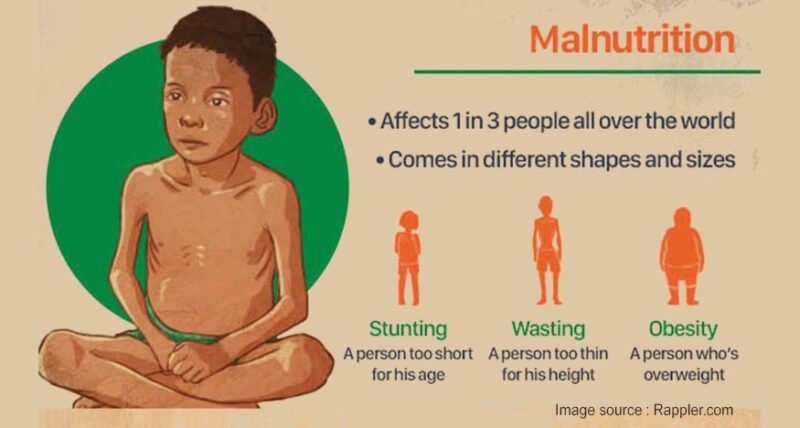
- Wasting — low weight for height, often a sign of recent, severe weight loss
- Stunting — low height for age, usually caused by chronic or repeated undernutrition
- Underweight — low weight for age
- Micronutrient deficiencies — a lack of essential vitamins and minerals, even when calorie intake seems adequate
Undernutrition is further split by nutrient type:
- Macronutrient undernutrition — a deficiency in proteins, carbohydrates, or fats, the nutrients the body needs in the largest quantities
- Micronutrient undernutrition — a deficiency in vitamins and minerals, needed in smaller amounts but still essential for the body to function
2. Overnutrition
Overnutrition is a more recent addition to the WHO’s official definition of malnutrition, and it covers the effects of consistently consuming more nutrients than the body needs. This includes:
- Macronutrient overnutrition — excess calories, proteins, carbohydrates, or fats, which the body stores as fat, increasing the risk of obesity and related conditions
- Micronutrient overnutrition — excessive vitamin or mineral intake, usually from supplements rather than food alone, which can lead to toxicity in some cases
Overnutrition is closely linked to obesity and diet-related conditions such as heart disease, type 2 diabetes, and certain cancers.
Why “Malnourished” Doesn’t Always Mean “Underweight”
This is one of the most misunderstood parts of malnutrition: a person can be overweight, or even obese, and still be malnourished. That’s because malnutrition is about nutrient balance, not body size. Someone can consume plenty of calories while still lacking essential vitamins and minerals — a pattern sometimes called “hidden hunger.”
Johns Hopkins Medicine notes that in the United States, more children today suffer from malnutrition due to dietary imbalances — eating the wrong things — than from an outright lack of food. This shows how much modern malnutrition has shifted from pure scarcity to poor nutritional quality.
What Causes Malnutrition?
Malnutrition doesn’t come from one single cause — it results from a mix of factors that can include:
- Inadequate access to food — due to poverty, food insecurity, or crisis situations
- Poor diet quality — relying on calorie-dense but nutrient-poor food
- Digestive or absorption disorders — conditions that prevent the body from properly absorbing nutrients even when food intake is adequate
- Chronic illness — long-term conditions that increase nutrient needs or suppress appetite
- Age-related risk — infants, young children, and older adults have higher nutritional needs relative to their intake, and are more vulnerable to both under- and overnutrition
- Lack of physical activity combined with poor diet — a key driver of overnutrition specifically
How Big Is the Malnutrition Problem, Globally?
The scale is larger than most people realize. According to WHO data, roughly 390 million adults worldwide are currently underweight, while around 890 million adults are living with obesity — showing that both ends of the malnutrition spectrum remain major global health issues at the same time.
This dual burden — undernutrition and overnutrition existing side by side, sometimes even within the same household — is now recognized as one of the defining nutrition challenges of the 21st century.
Why Understanding Malnutrition Matters
Recognizing malnutrition for what it truly is — not just visible hunger, but any imbalance in nutrient intake — is the first step toward addressing it effectively. A community facing undernutrition and a community facing overnutrition may need completely different interventions, even though both technically fall under the same medical term.
This is exactly why organizations like Cry America approach nutrition holistically — focusing not just on food quantity, but on food quality, education, and long-term access to balanced nutrition, especially for children in their most critical years of development.
FAQs on Malnutrition
Q1. What is the simplest definition of malnutrition? Malnutrition is an imbalance between the nutrients your body needs and the nutrients it actually gets — whether that means too little, too much, or the wrong mix altogether.
Q2. Is malnutrition the same as starvation? No. Starvation is a severe, extreme form of undernutrition, but malnutrition is a much broader term that includes overnutrition, hidden micronutrient deficiencies, and dietary imbalance — not just extreme hunger.
Q3. Can a person be malnourished while overweight? Yes. A person can consume enough — or even excess — calories while still lacking essential vitamins and minerals, making them malnourished despite a normal or high body weight.
Q4. What are the main types of malnutrition recognized by WHO? The WHO recognizes undernutrition (including wasting, stunting, underweight, and micronutrient deficiencies) and overnutrition (including obesity and diet-related non-communicable diseases) as the two main categories.
Q5. Who is most at risk of malnutrition? Infants, young children, pregnant women, and older adults face the highest risk, due to higher nutritional needs relative to their body size or reduced ability to absorb and process nutrients effectively.
Final Thoughts
Malnutrition is a far bigger, more nuanced issue than the images of famine most people associate with the word. It touches nearly every country and every income group, in forms that range from a child not getting enough protein, to an adult quietly developing chronic disease from years of poor dietary balance.
At Cry America, we believe that solving malnutrition starts with understanding it correctly — because a problem this widespread needs solutions built on facts, not assumptions.
This article is for informational purposes only and is not a substitute for professional medical advice. If you have concerns about your own or a family member’s nutritional health, please consult a qualified healthcare provider.