

Solar Design Software: Transforming the Way Solar Projects Are Planned and Delivered
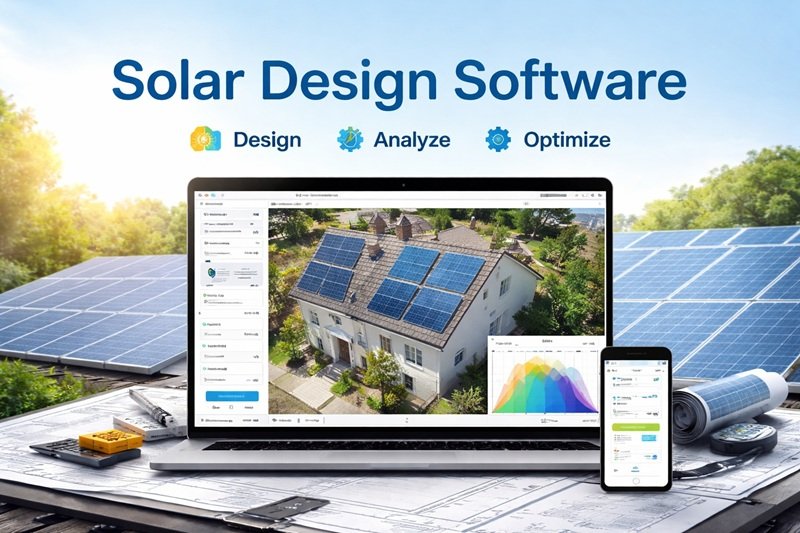
The solar industry is evolving rapidly, and installers are under constant pressure to design systems faster, improve accuracy, and deliver better customer experiences. Traditional design methods often rely on manual calculations, multiple software tools, and time-consuming site assessments. As project volumes increase, these approaches can limit productivity and create costly errors.
Solar design software solves these challenges by helping installers create accurate system layouts, perform shading analysis, estimate energy production, and generate customer-ready proposals from a single platform. Modern solutions such as Solargraf combine artificial intelligence, automation, proposal generation, and permitting capabilities to streamline the entire solar project lifecycle.
What Is Solar Design Software?
Solar design software is a specialized platform that helps solar professionals plan, model, and optimize photovoltaic systems before installation. These tools use aerial imagery, production modeling, and automation to create accurate solar system designs while reducing engineering effort.
Instead of manually measuring rooftops and calculating production estimates, installers can use software to design complete solar systems in minutes. Advanced platforms also include battery modeling, financial analysis, proposal generation, and permitting workflows.
Why Solar Design Software Matters
Accurate system design directly affects project profitability, energy production, customer satisfaction, and installation efficiency.
Solar design software helps businesses:
- Reduce design time
- Improve proposal accuracy
- Optimize panel placement
- Minimize site visits
- Increase operational efficiency
- Improve customer confidence
- Scale projects more effectively
By automating repetitive tasks, solar companies can focus on customer acquisition and project execution rather than manual design work.
Essential Features of Modern Solar Design Software
AI-Powered Roof Modeling
Artificial intelligence has significantly improved solar design workflows. Modern software can automatically identify roof boundaries, obstructions, and usable installation areas.
Benefits include:
- Faster roof analysis
- Improved measurement accuracy
- Reduced manual input
- More consistent designs
Solargraf uses AI-powered tree and obstruction detection to help installers create system layouts more efficiently.
Advanced Shading Analysis
Shading can significantly impact system performance. Accurate shading analysis allows installers to optimize panel placement and improve energy generation.
Modern shading tools provide:
- Hourly sun-path simulations
- 3D shading models
- Obstruction detection
- Production impact forecasting
- Solar access calculations
Solargraf’s shading engine simulates sunlight throughout the year and provides detailed production estimates based on weather data and site conditions. The platform’s shading analysis has been verified by organizations including NREL, NYSERDA, and CEC.
Automated Panel Placement
Many solar design platforms can automatically generate panel layouts based on roof geometry and system requirements.
Advantages include:
- Faster design creation
- Better space utilization
- Consistent layouts
- Improved energy optimization
AI-assisted design tools help installers create optimized panel arrangements while reducing manual design effort.
Production Forecasting
Reliable production estimates are critical for customer decision-making and project planning.
Solar design software can estimate:
- Annual energy production
- Utility savings
- System efficiency
- Return on investment
- Battery performance
- Consumption offset
Modern production engines use advanced simulation models to improve forecasting accuracy. Solargraf has upgraded its production engine to deliver more accurate energy estimates for solar projects.
Multiple Image Sources
High-quality imagery improves design precision and reduces the need for physical site visits.
Many platforms support:
- Satellite imagery
- Aerial photography
- Google Maps
- Bing Maps
- Drone imagery
- Blueprint uploads
These options provide greater flexibility for accurate solar system planning.
Benefits of Solar Design Software for Installers
Faster Project Delivery
Automated design workflows allow installers to complete system layouts and proposals much faster than traditional methods. Some solar professionals report being able to create complete designs and proposals within minutes.
Improved Accuracy
AI-powered calculations, advanced shading analysis, and automated design validation help reduce human error and improve system reliability.
Better Customer Experience
Visual system layouts, production forecasts, and financial projections make it easier for customers to understand the value of solar investments.
Lower Operational Costs
Reducing manual calculations, site visits, and design revisions can significantly lower project soft costs and improve profitability.
Easier Business Scaling
Standardized design workflows allow businesses to handle more projects without proportionally increasing engineering resources.
How Solargraf Enhances Solar Design
Solargraf combines design, proposal generation, financing, integrations, and permitting into a unified platform. This reduces the need for multiple software systems and creates a more efficient workflow for solar professionals.
AI-Assisted Design
The platform automatically identifies trees and roof obstructions while simplifying panel placement and layout creation.
Accurate Shading Analysis
Its proprietary shading engine performs detailed irradiance calculations and production modeling, helping installers maximize system performance.
Auto-Stringing Technology
String inverter systems often require complex electrical design calculations. Solargraf’s auto-stringing feature automatically generates optimized string configurations while validating electrical compatibility and improving design efficiency.
Integrated Proposal Generation
Installers can convert system designs into professional proposals with financing options, branding customization, and customer-ready presentations.
Automated Permitting
Beyond design, Solargraf supports permit plan generation, electrical diagrams, and compliance-focused documentation. Recent AI-powered permitting enhancements can significantly reduce permit preparation time.
What to Look for in Solar Design Software
When evaluating solar design software, consider the following criteria:
Design Accuracy
Look for advanced production modeling, shading analysis, and validated simulation engines.
Automation Features
AI-powered workflows can dramatically reduce design effort and increase productivity.
Ease of Use
The software should be intuitive enough for both technical and sales teams.
Proposal Integration
Combining design and proposal generation improves efficiency and customer engagement.
Permitting Support
Integrated permitting capabilities help accelerate project approvals.
Scalability
Choose software that can support future growth and increasing project volumes.
Future Trends in Solar Design Software
The next generation of solar design software will continue leveraging artificial intelligence, automation, and predictive analytics.
Emerging innovations include:
- Fully automated system design
- Real-time design optimization
- Enhanced battery storage modeling
- Advanced AI-powered roof detection
- Automated electrical engineering
- Faster permit generation
- Deeper CRM and financing integrations
These advancements will help solar companies improve efficiency, reduce costs, and deliver more accurate solar solutions.
Conclusion
Solar design software has become an essential technology for modern solar businesses. By automating roof modeling, shading analysis, production forecasting, proposal generation, and permitting, these platforms help installers improve accuracy, increase productivity, and enhance customer satisfaction.
Solutions like Solargraf demonstrate how AI-powered design tools can simplify complex solar workflows while supporting business growth. As solar adoption continues to accelerate, investing in advanced solar design software will remain a key competitive advantage for installers seeking greater efficiency and long-term success.